Controlled Aggression in the Ruy Lopez
I’ll start this with a brief word about how utterly infuriated I was that I lost this game. Probably the most annoyed that I’ve been after a loss since maybe the drawn bishop endgame that I lost at Thornaby like a year and a half ago. Why was I so salty? Because I’d outplayed him, his position was brutally uncomfortable, he was literally shaking on his chair (which was immensely annoying but I did at least take it as a sign that my position was good) and I had exactly the kind of position that I’m looking for in the closed Ruy Lopez…
And then I blundered it away in one stupid move. Fancy play syndrome strikes again. Anyhow, the game:
Opening
e4 e5 Nf3 Nc6 Bb5 a6 Ba4 Nf6 O-O Bb3 d6, standard Ruy Lopez stuff, but my next move was a slight inaccuracy: the immediate h3?!
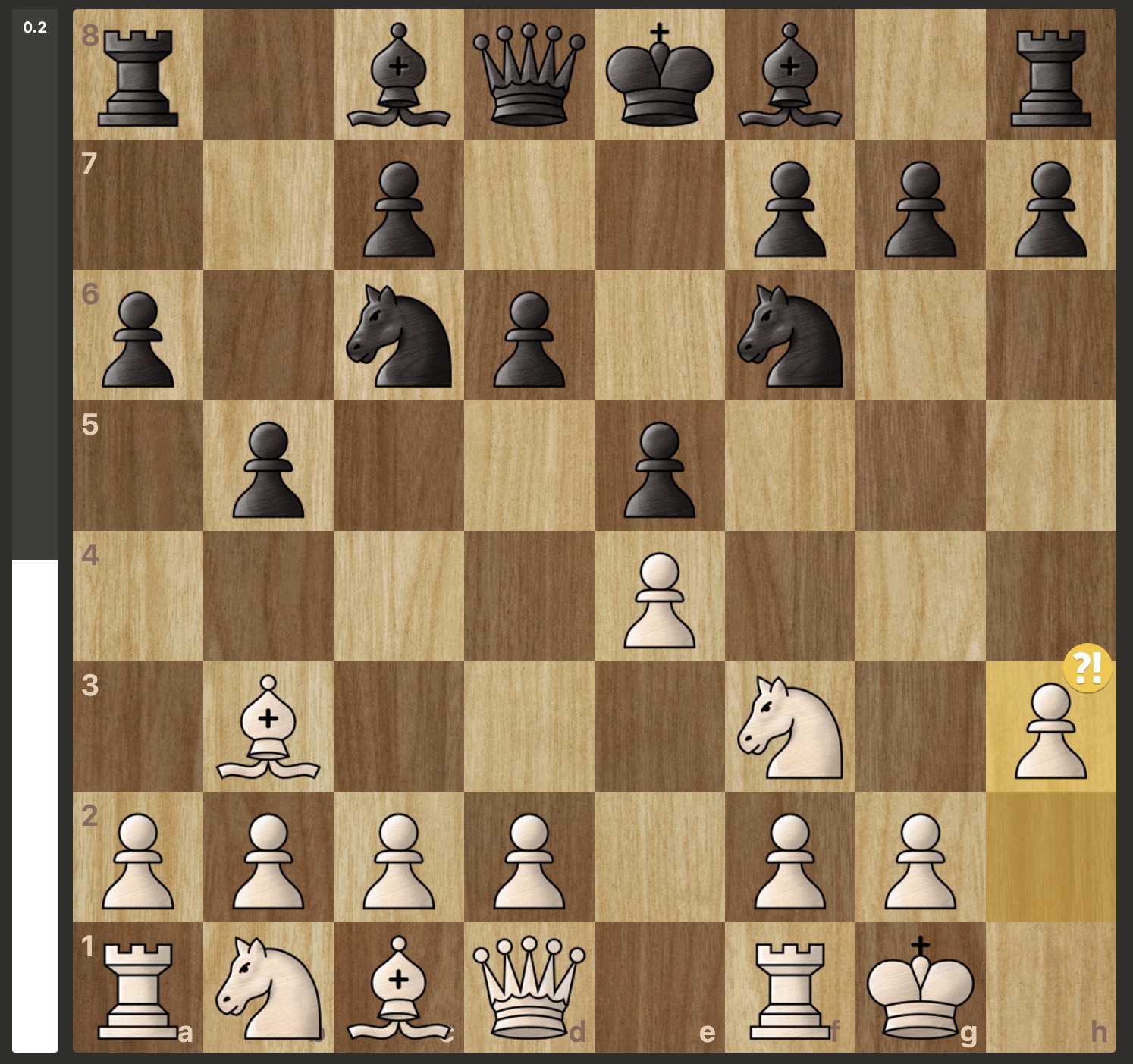
Basically it’s an inaccuracy because it allows Na4 and the light squared bishop is trapped. Plus, and this is an interesting idea, we can actually allow the pin on the f3 knight because after c3 Bg4 h3 Bh5, blacks light squares on the queenside start to look a bit feeble:
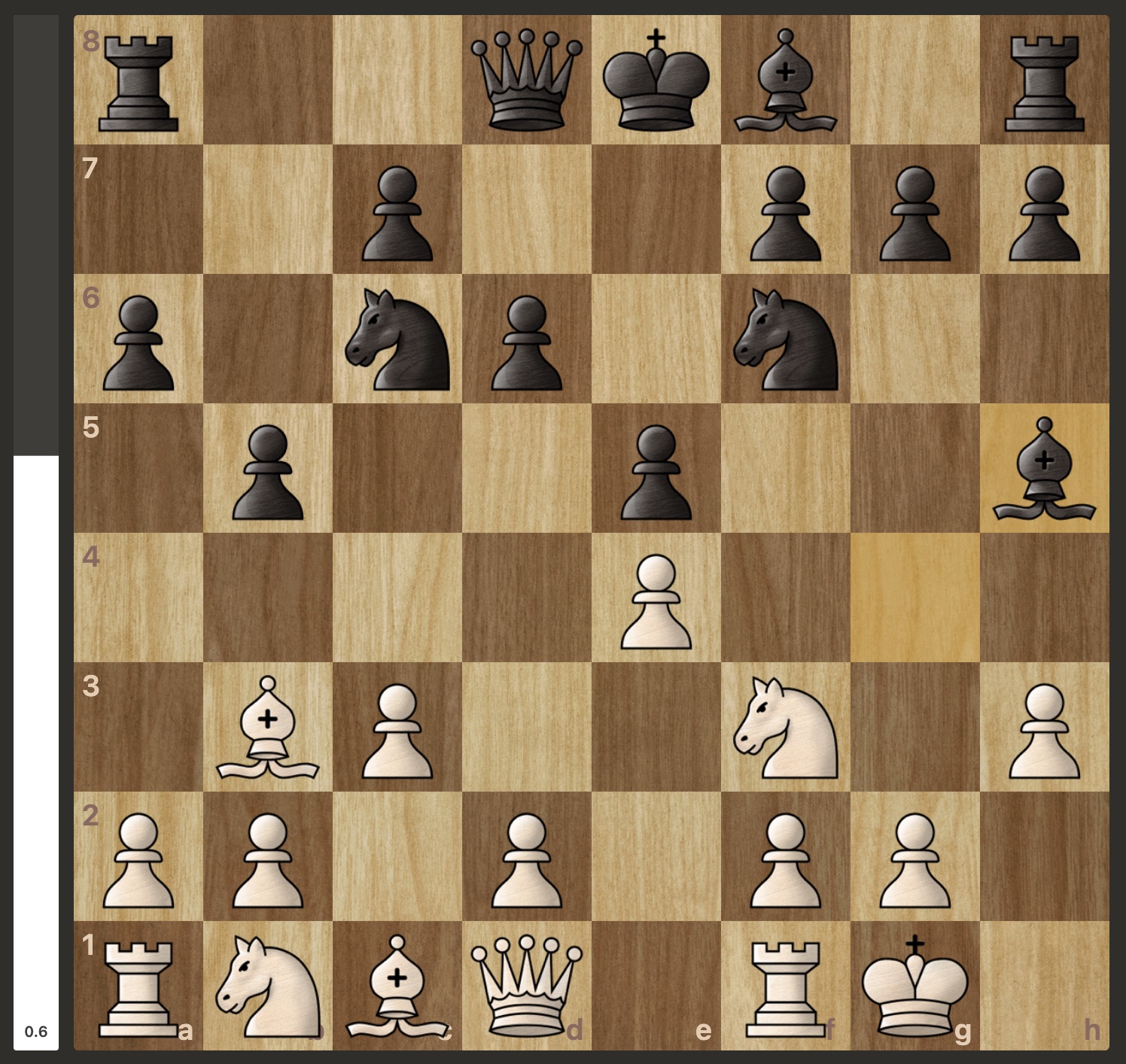
The move suggested here is a4, instantly putting pressure on these light squares. Pretty nifty move! Anyway the actual game continued h6 (an inaccuracy from him, which I knew) c3 Be7 d3 O-O Re1 Na5 Bc2 c5 Nbd2 Bb7 Nf1 Qc7 Ng3 Rfd8 and I jump the knight into f5, and in response he drops the bishop back to c8:
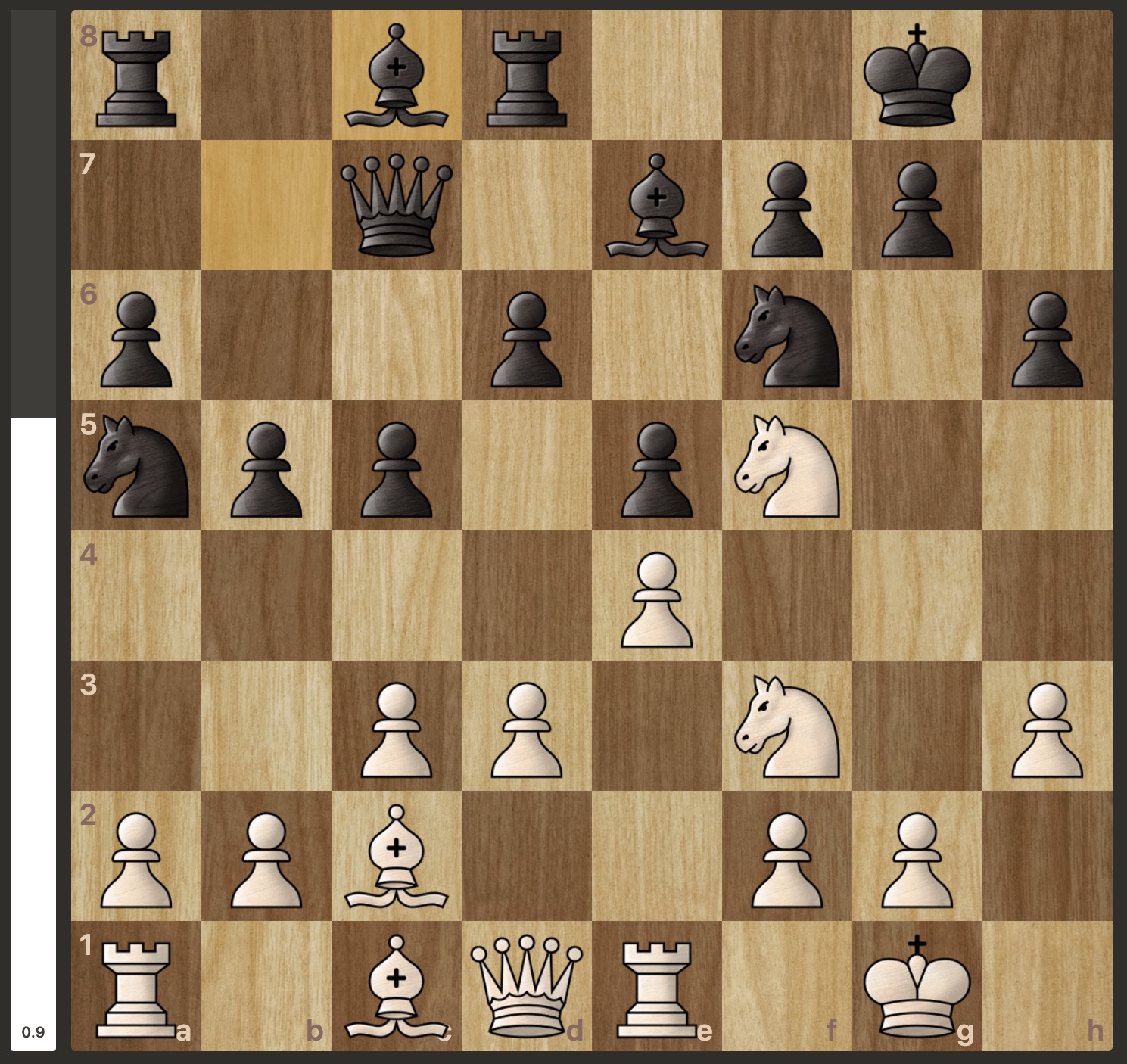
I knew my position was better here. I thought his rook being placed on the D file instead of the E file was an inaccuracy, and his knight on a5 looks silly (and will continue to look silly for the foreseeable), not to mention moving his bishop back to the starting square. This was where my first inaccuracy of the game came in. Here, I played N3h4, and that was not the most accurate. The engine here wants to take on e7, then when the queen recaptures play the d4 break. The reasoning it gives is that blacks pieces are poorly coordinated, and white simply gets a nice space advantage and more squares upon which to put their pieces. On top of this, it seems that black’s dark squared bishop is a really key defender in these kingside attack lines (moves like Bf8 are possible to guard against any Bxh7 ideas), plus we really don’t want to allow Bxf5 and give black’s knights access to the d5 square, so I guess in that way it does make sense.
I chose the second-best move though, and went forward with N3h4 - he made yet another inaccuracy here though and for some reason retreated his knight to h7:
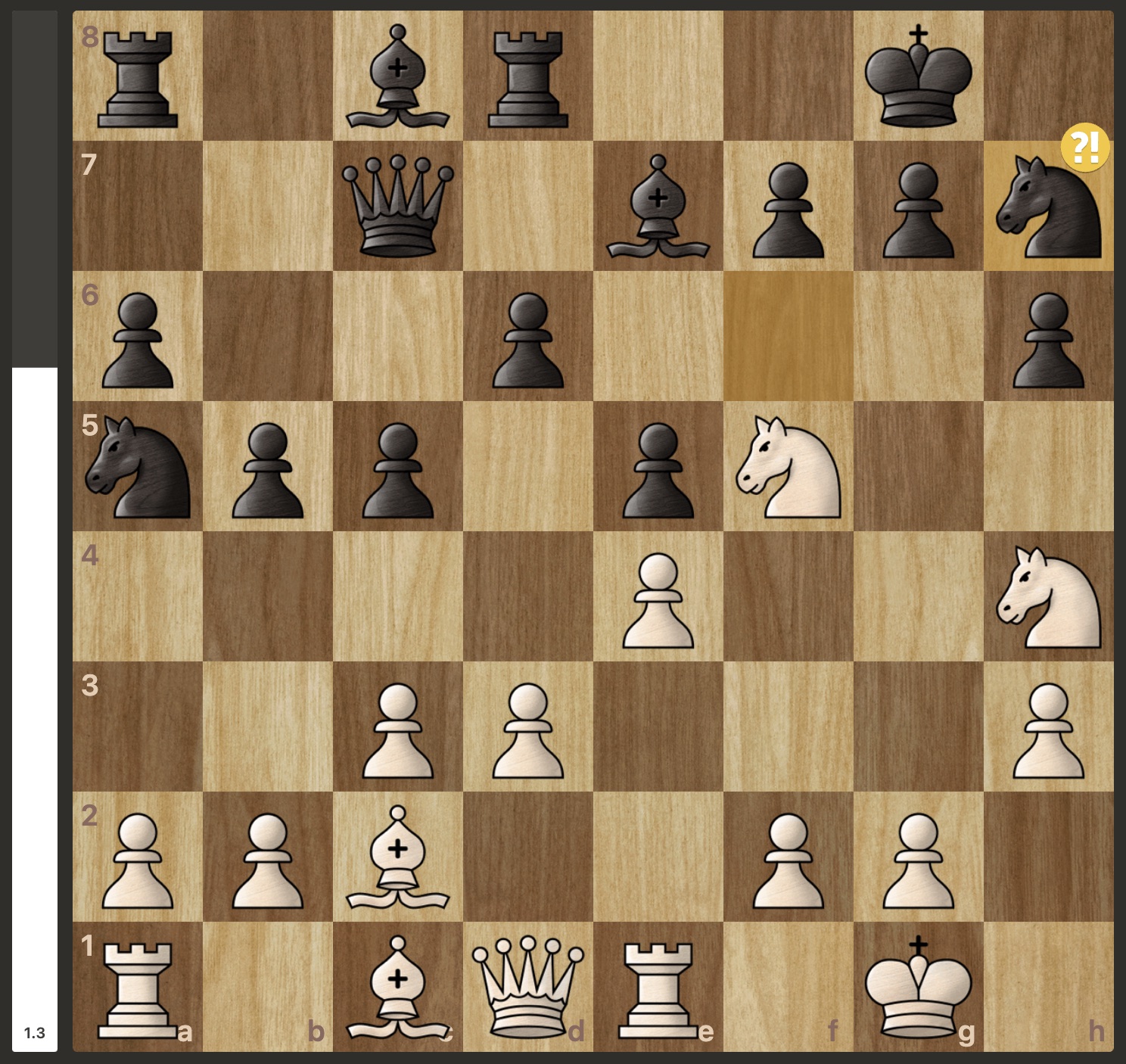
I responded with the strongest move, Qg4, threatening mate. Black now plays the interference Bg5, the best move in the position; now we can start to see more clearly why the engine doesn’t actually mind trading the strong f5 knight off for the e7 bishop, because it removes one of the key kingside defenders. Anyway, in the following position I thought for quite some time:
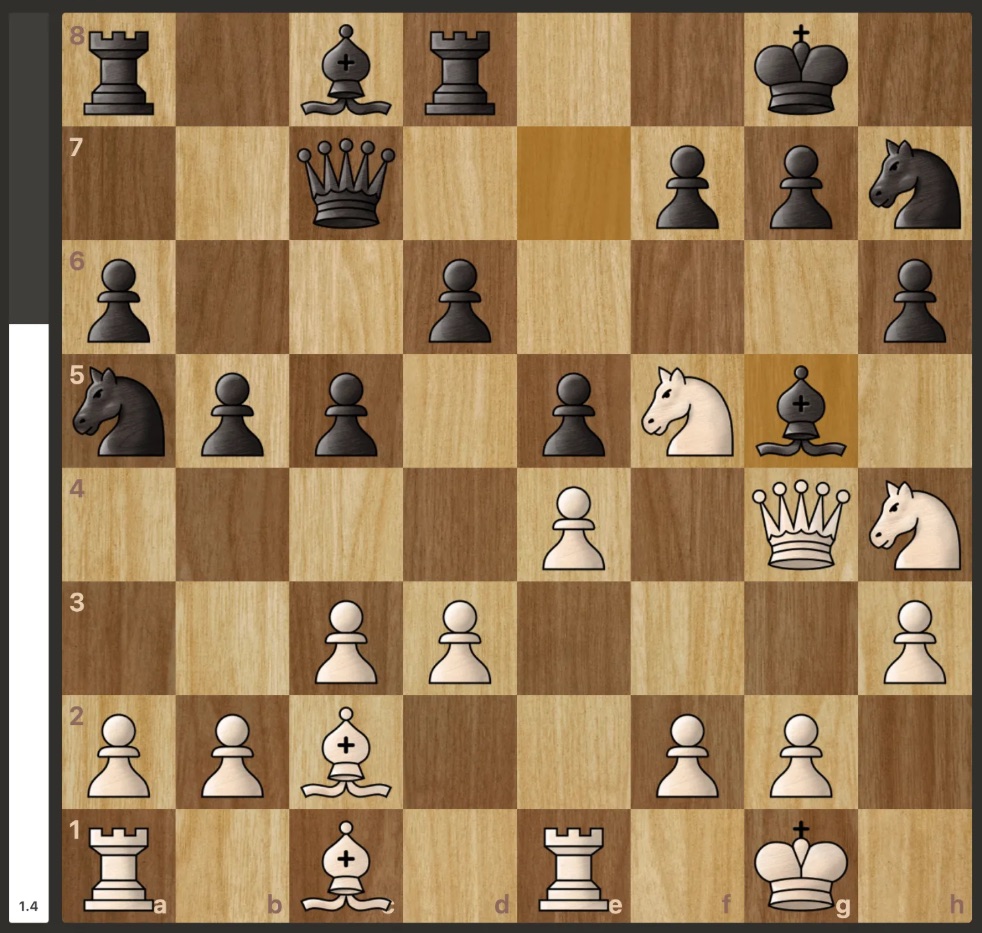
I played f4, which wasn’t the strongest. The strongest move recommended by the engine is actually to take, which I wrote off without much thought; letting his stupidly placed knight on h7 get to a better square, removing any possibilities of a Bxh7 sacrifice, I just couldn’t see why that would ever be the move. Turns out that taking with the knight is actually a significant inaccuracy though!
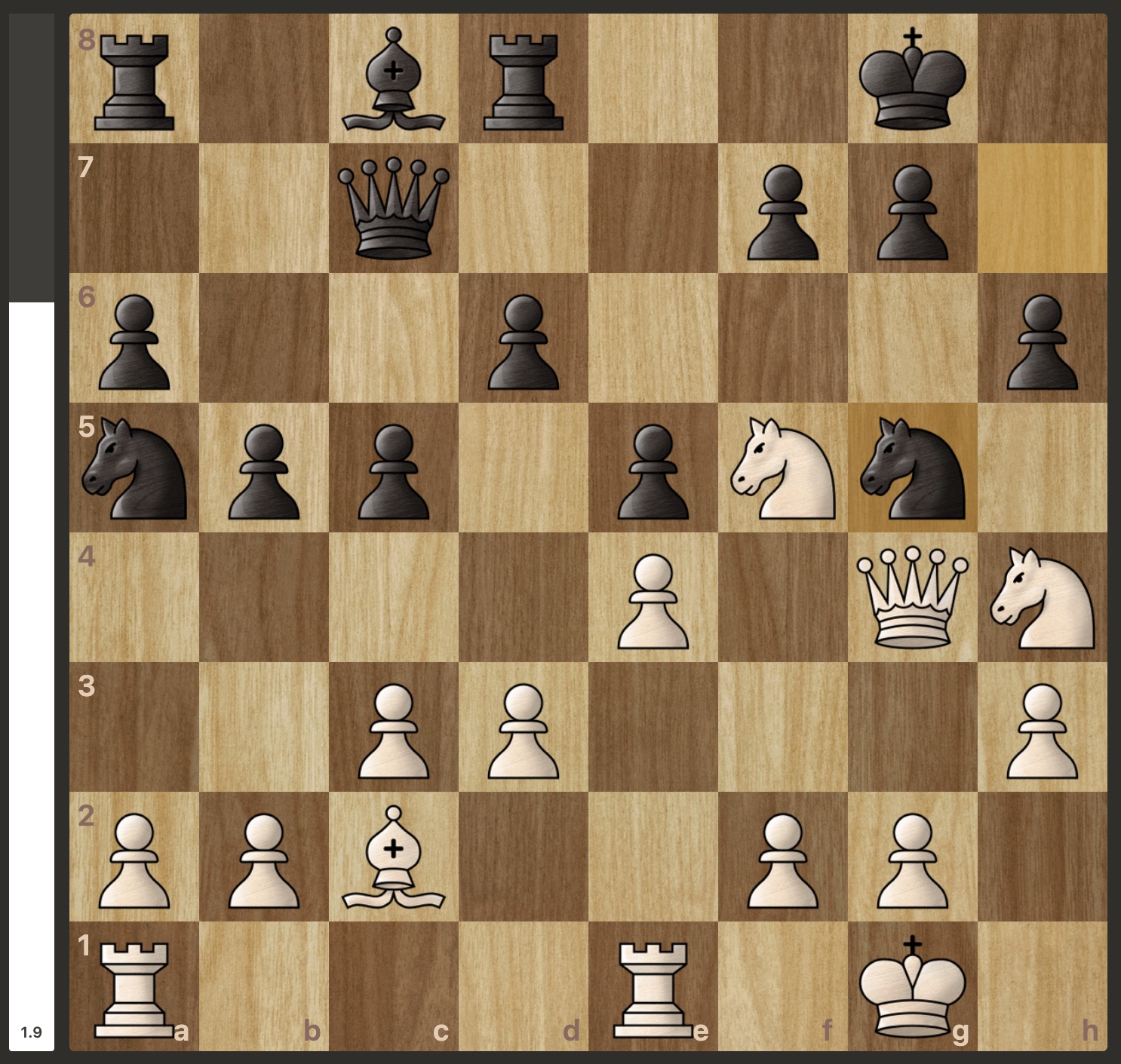
Turns out that the attack, the slow attack, gets through anyway. Play continues with the rook lift Re3 and the best engine move for black is Ra7 to laterally defend the 7th rank in all the coming lines. I don’t think thats ever getting played though. Whatever the move from black here, the plan is the same for white, bring the rooks over to the kingside, push f4 in order to open up the b1-h7 diagonal for the bishop and take advantage of blacks terrible piece coordination to mount an attack. A slow attack.
So Re3 then. If black plays Kh7 now to try and move the king to a safer square and maybe slide the rook over to g8 to defend, now f4 actually works because after the queen recapture this is the position:
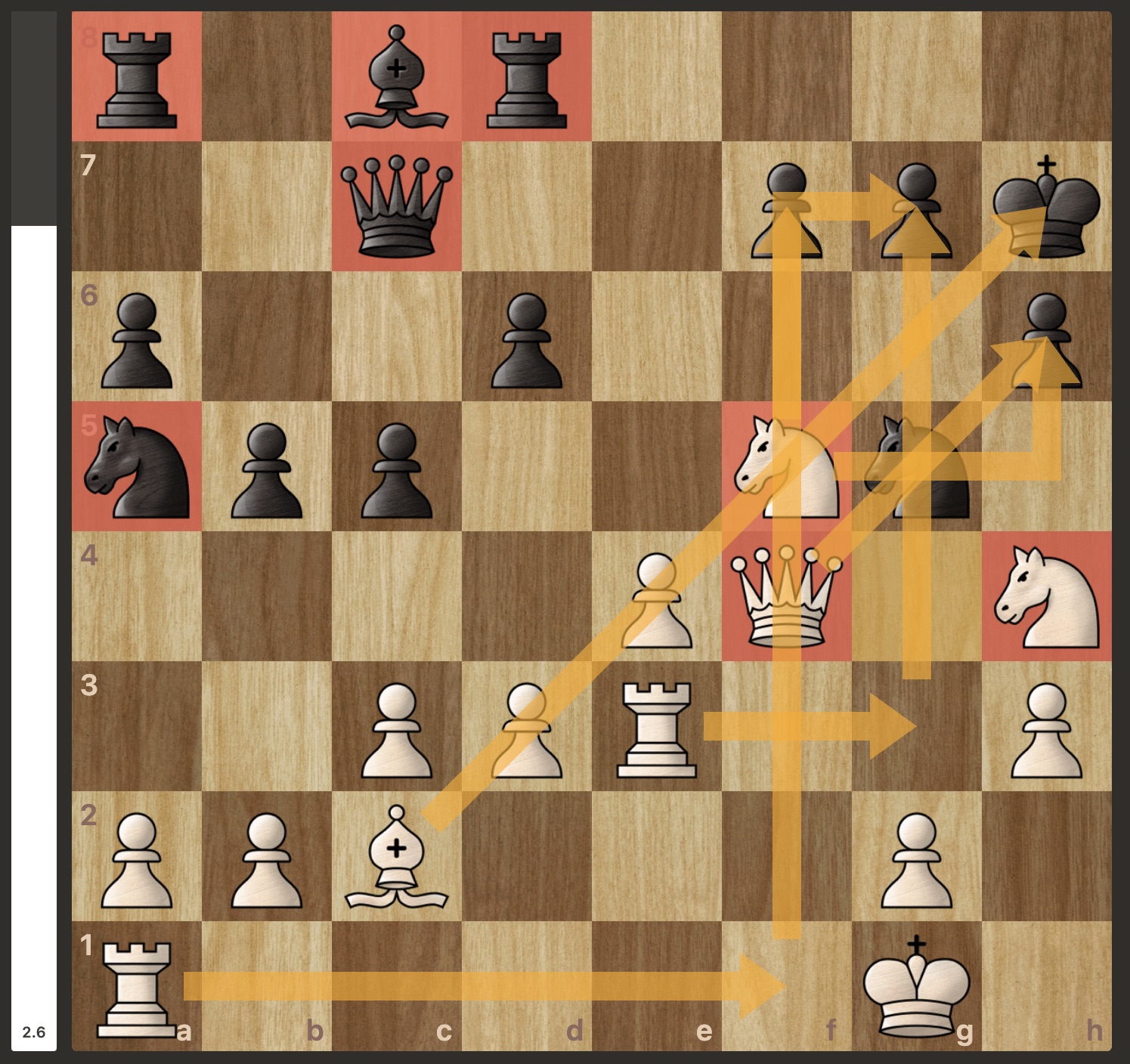
This is the complete refutation of blacks earlier developmental inaccuracies - the knight, and to be honest all of black’s army, is offside. This is why the bishop exchange is fine, because it just gets rid of one of blacks only kingside defenders. The slow attack! I think the inaccuracy here stems from the position after Bg5. I tried to make the complications happen immediately, but I didn’t need to. The damage is already done to the black position and the way to punish it is just to play natural moves, bring more pieces into the attack; which we have time to do because of blacks poor piece coordination.
Anyhow, I went for f4 immediately which doesn’t work in the same way:
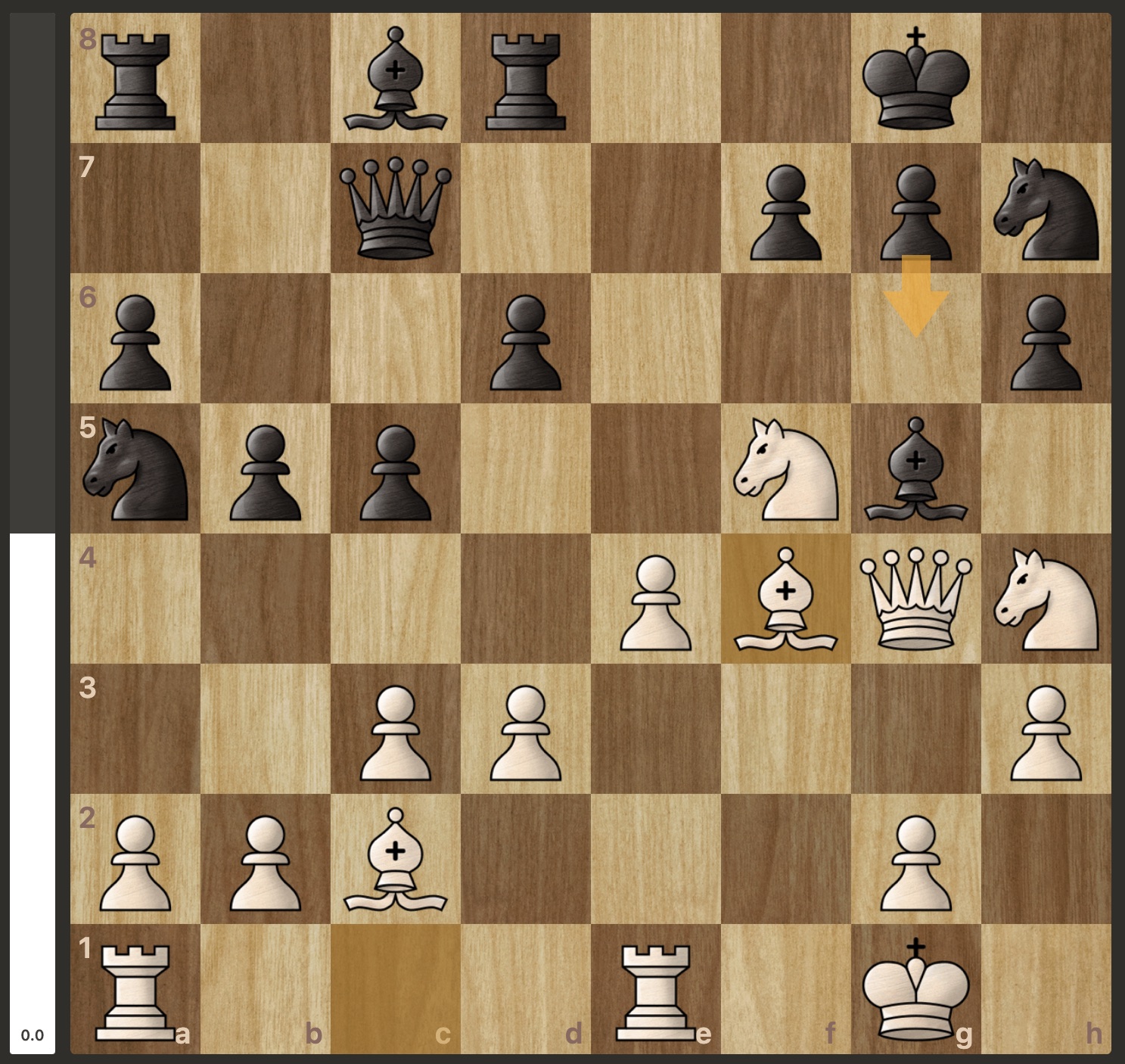
Why? Because now after takes takes there’s the countershot g6! and black defends. The line by the engine is some crazy perpetual but even without that, not seeing that f4 leads to this g6 move is a serious error. Note here that in the line after Bxg5 Nxg5 which I was so dismissive of, this g6 countershot doesn’t work because the h6 pawn now hangs with check.
Black didn’t punish this inaccuracy from me though, and in the above position played Kh8 which sends the evaluation back up to +1.8 for white. I found the strongest move e5, and he replied with the strongest move in turn, d5. Qg3 to break the pin next, and Be6 to start gluing the position back together. d4 to open up the light squared bishop and Rg8 to get some kingside defence:
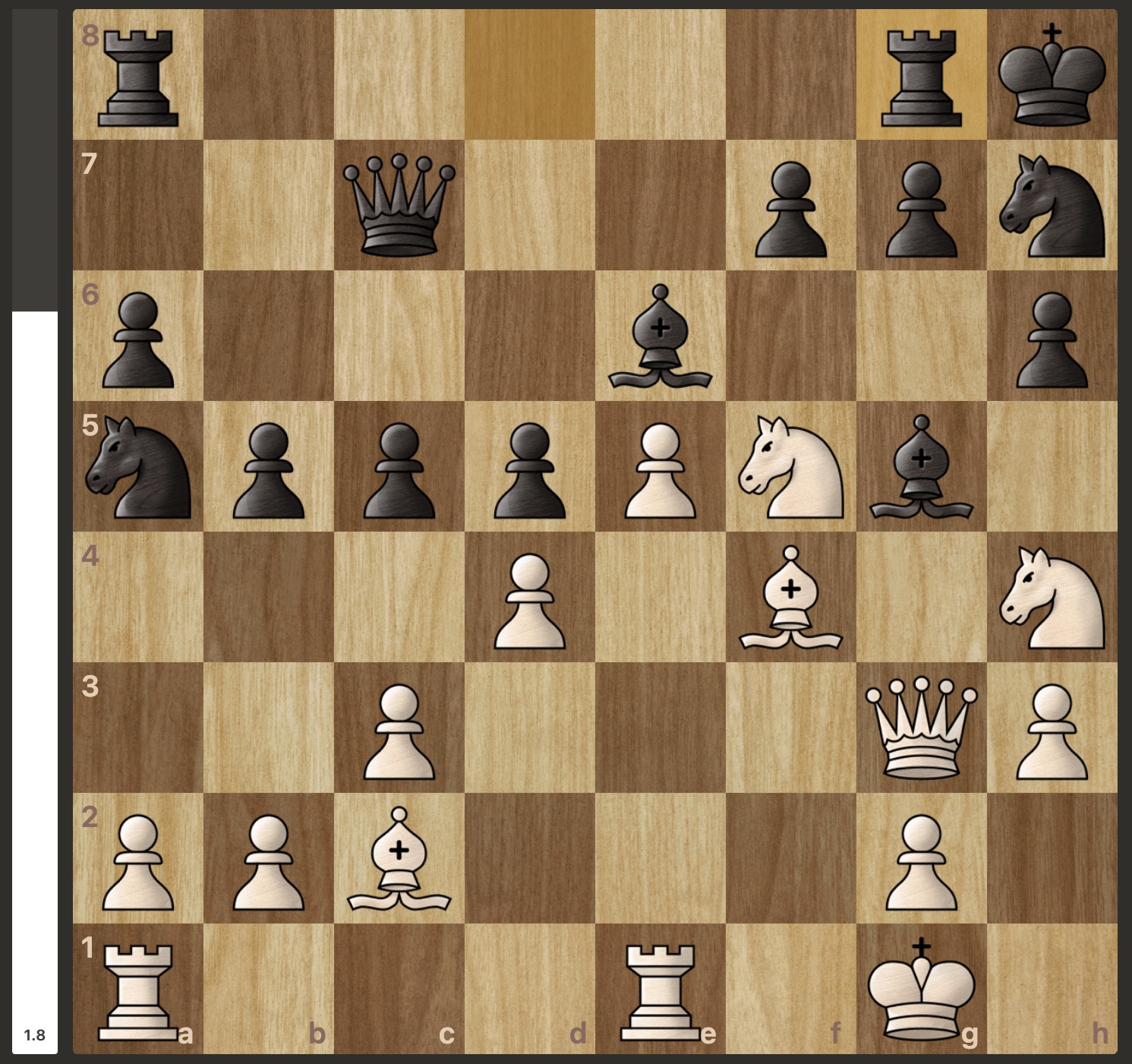
~+2 for white, but there’s no obvious winning shot. As Learn from the Masters said, ‘in positions where one side has a clear advantage but the position is such that there is no easy and direct path to victory, the only plan that remains is to slowly improve the placement of all of the pieces and squeeze all of the possible advantage out of the position.’
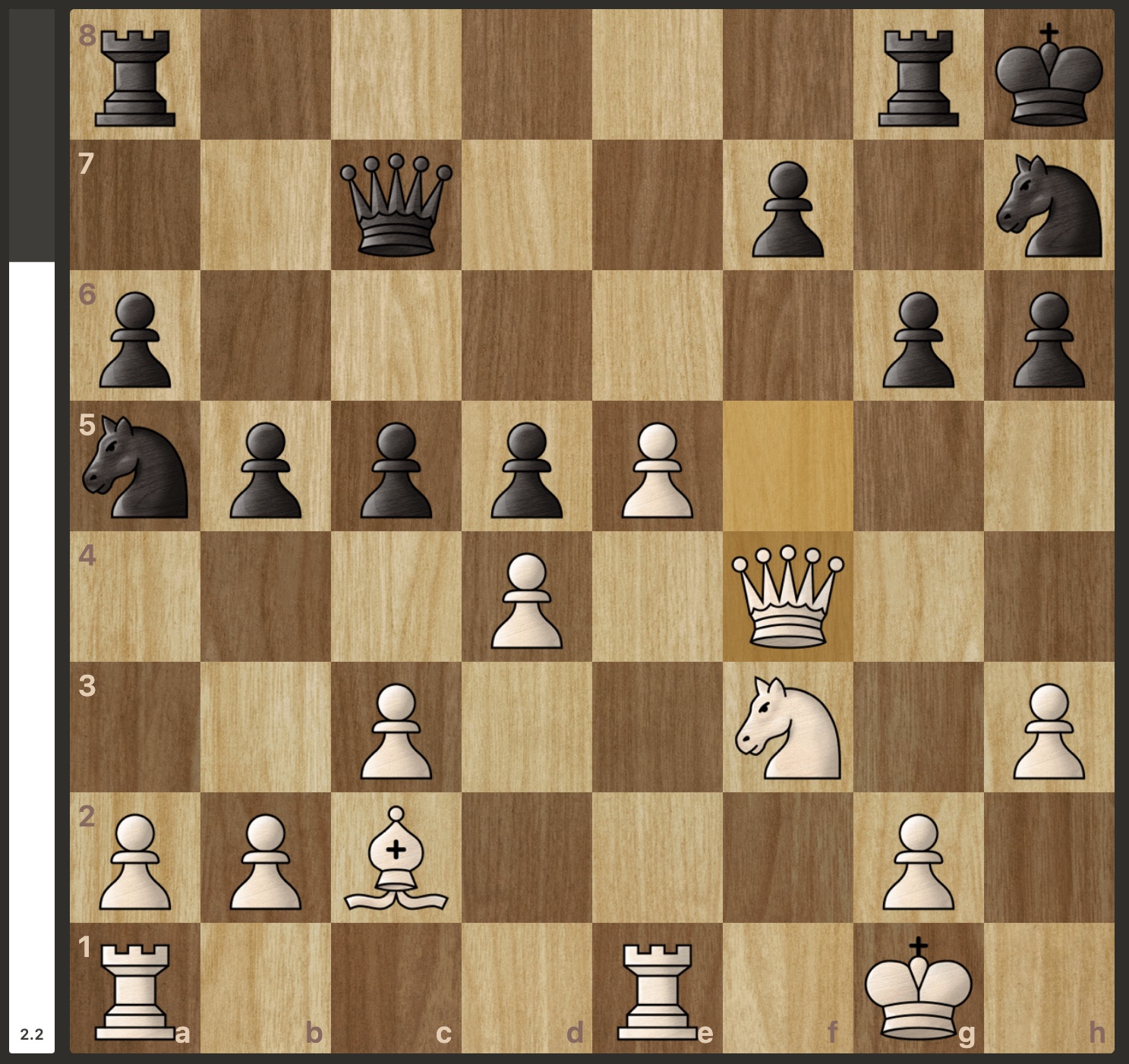
I spent a lot of time here too, looking for a killshot that it turned out wasn’t yet there. Best according to the engine is Nf3 Bxf4 Qxf4 Bxf5 Qxf5 g6 and queen to either f4 or g4, with a position like this:
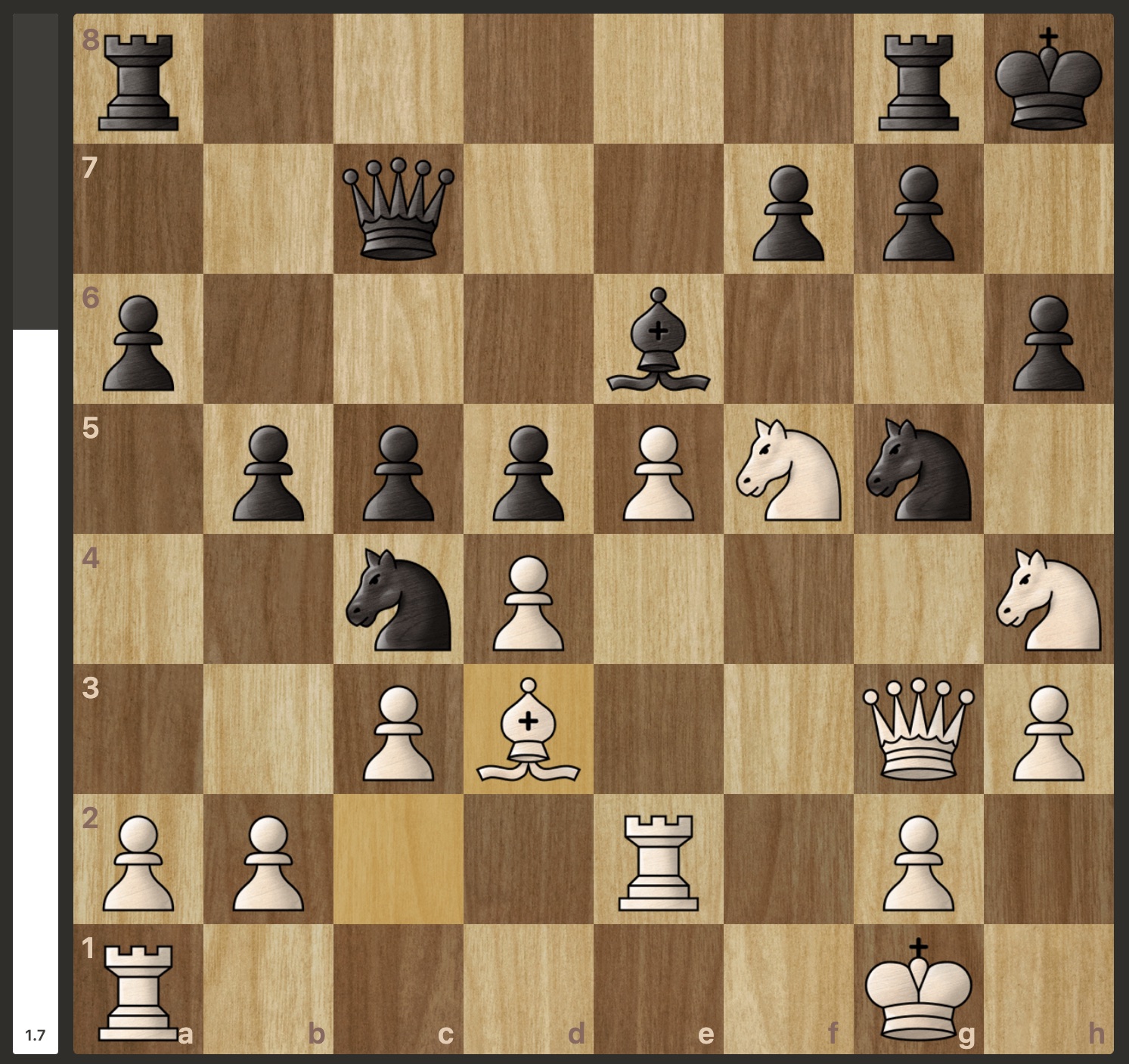
Also fine here is Bxg5 Nxg5 Re2 Nc4 Bd3, where this is the resulting position:
I didn’t find the most accurate continuation here (I think switching gears from ‘what can I sac to open this guys king’ to ‘how can i slowly improve my position here was hard) and played Rf1:
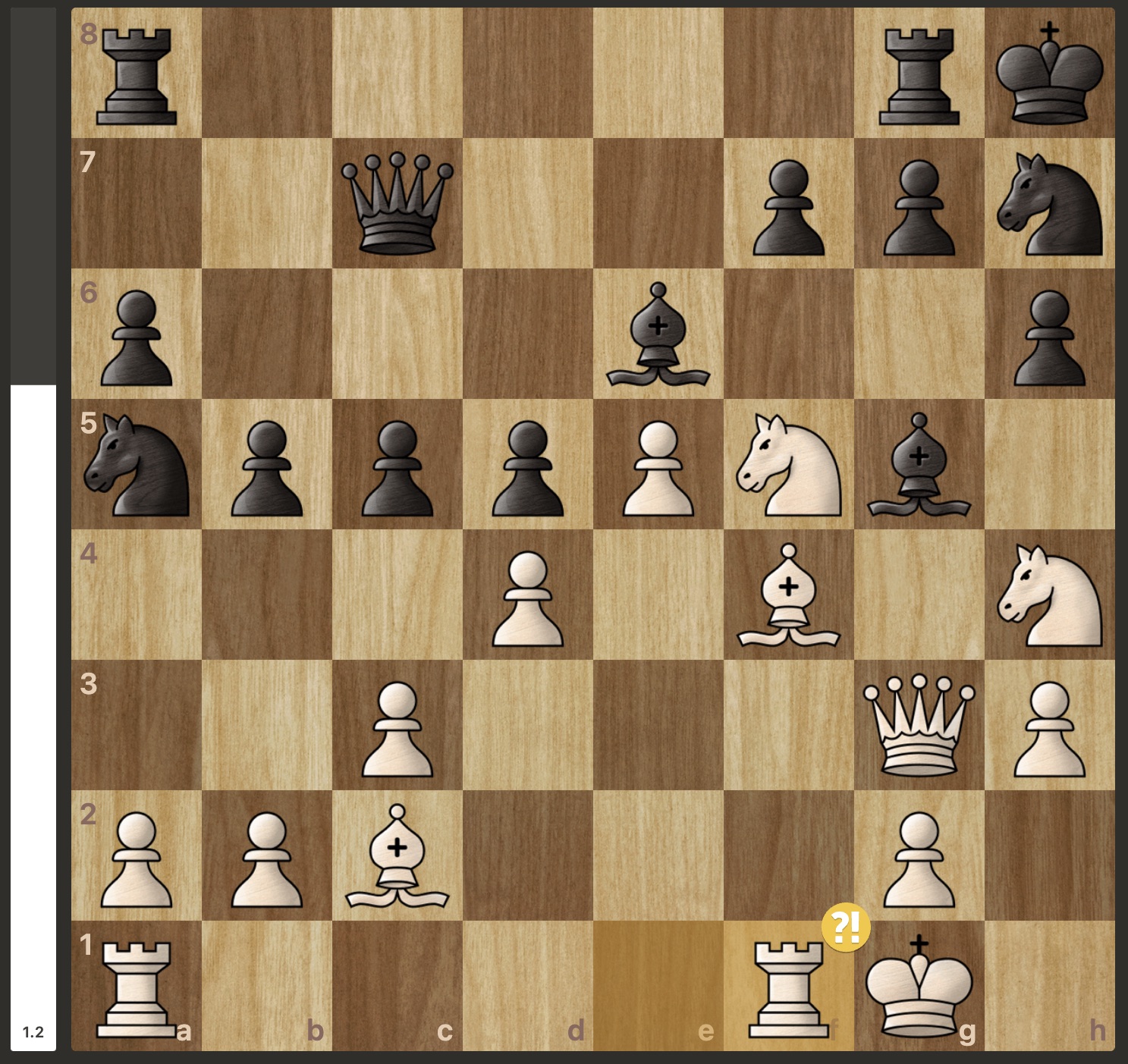
An inaccuracy because it allows all the lines starting with Nc4 - the b2 weakness is a problem, and even without that we’re giving black time to slowly re-coordinate his pieces. b3 is actually a huge blunder here because it allows Na3 Bd3 c4 bxc4 bxc4 Bb1 Nxb1 and the key defender of the f5 knight is gone - Bxh4 Qxh4 Bxf5! … very clever.
He didn’t find that line though, and chopped on f4:
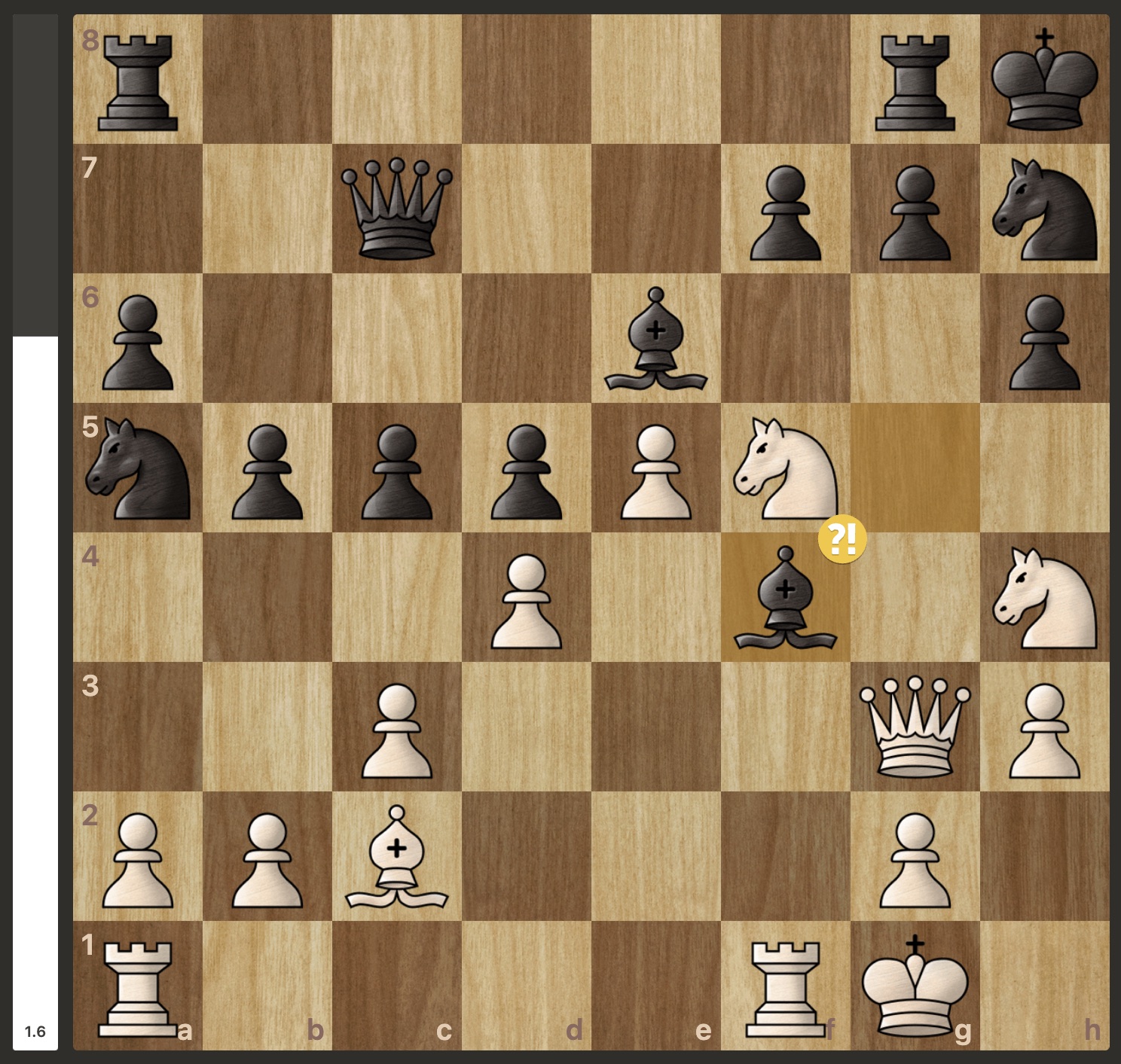
Now the best move is to take with the rook, which we’ll come back to, but first there was a serious case of fancy play syndrome that needs to be addressed. The losing move: Qg6??
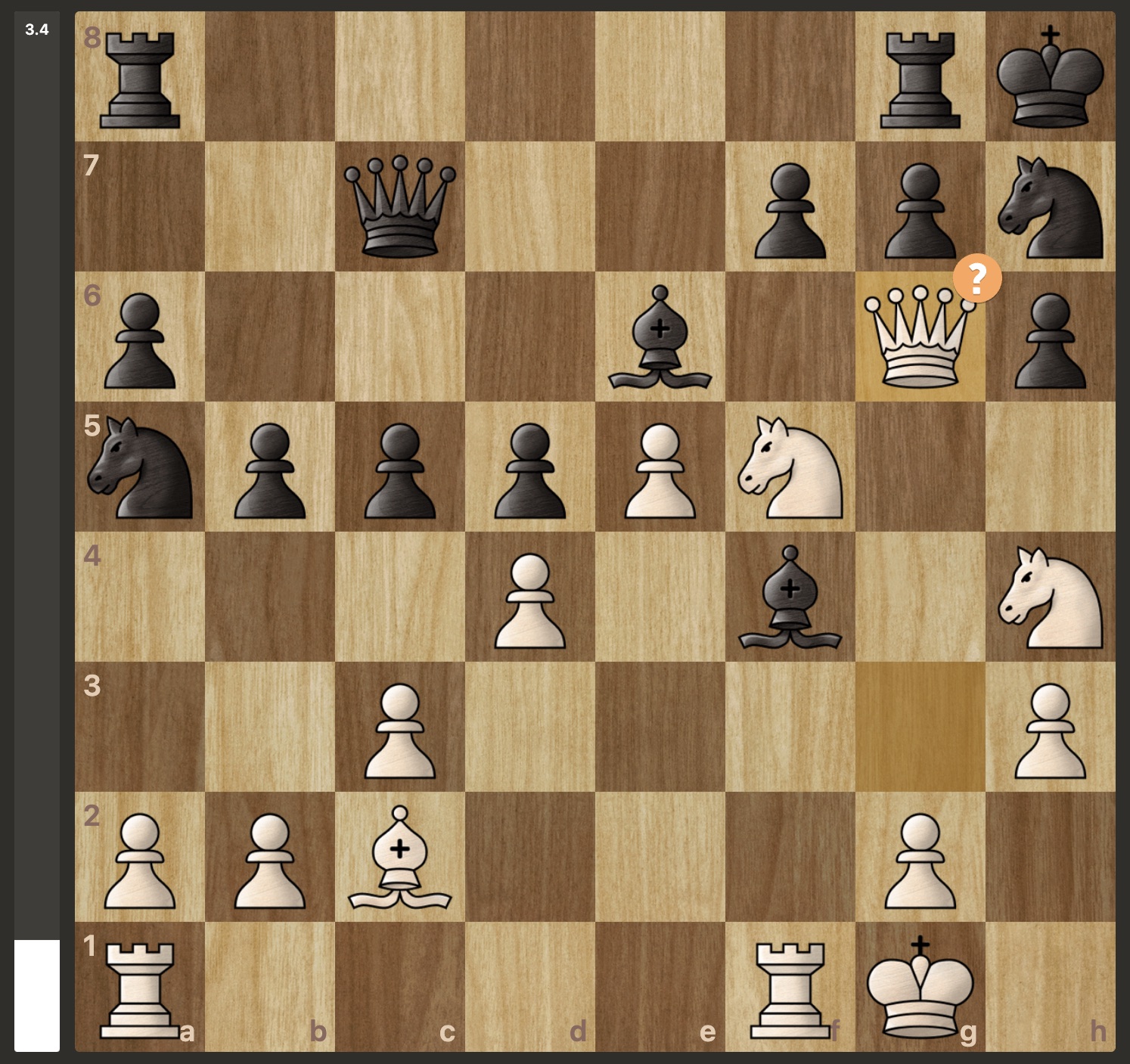
You can’t take, obviously, because of Nxg6# smothered mate. Would have looked very cool but Aryan is too good of a player to blunder a one move checkmate like that. I really did think that this was the position where the breakthrough was possible, but that turned out not to be the case. There’s not any way to pry open the defences and all of the key squares are covered by the black pieces, of which there are now sufficiently many to hold the position. What are the concrete lines with Qg6? Bxf5 Bxf5 Nh7 defends, Nf8 and the queen just has to go back without the tempo needed to recapture the piece. There are ideas of sacking the queen on h7 to bring about the smothered mate, but white needs another tempo. The position being what it is, black is in time to defend.
The best move was Rxf4, but it’s not so clear why.
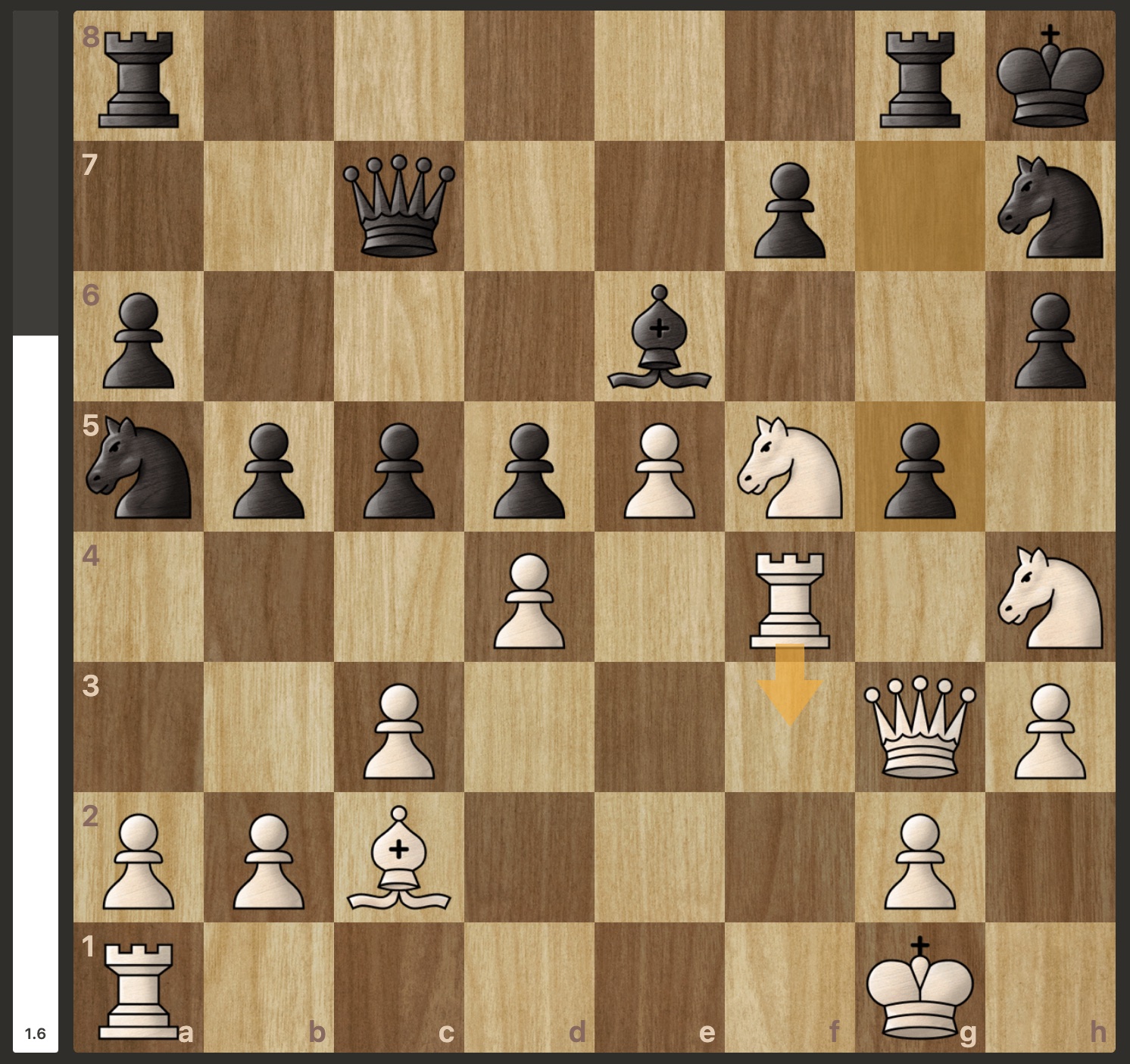
First reason being because of the immediate fork. Aryan and I analysed this position for maybe 10 minutes after the game to try and find the line where white keeps an advantage, but couldn’t find anything. Turns out, the only winning idea here is to drop the rook back, let the knight be captured (!!), recapturing with the queen. After Bxf5 Rxf5! (taking back with the rook is the only move), the engine evaluates the following position as +2.4 for white, despite being a piece down!
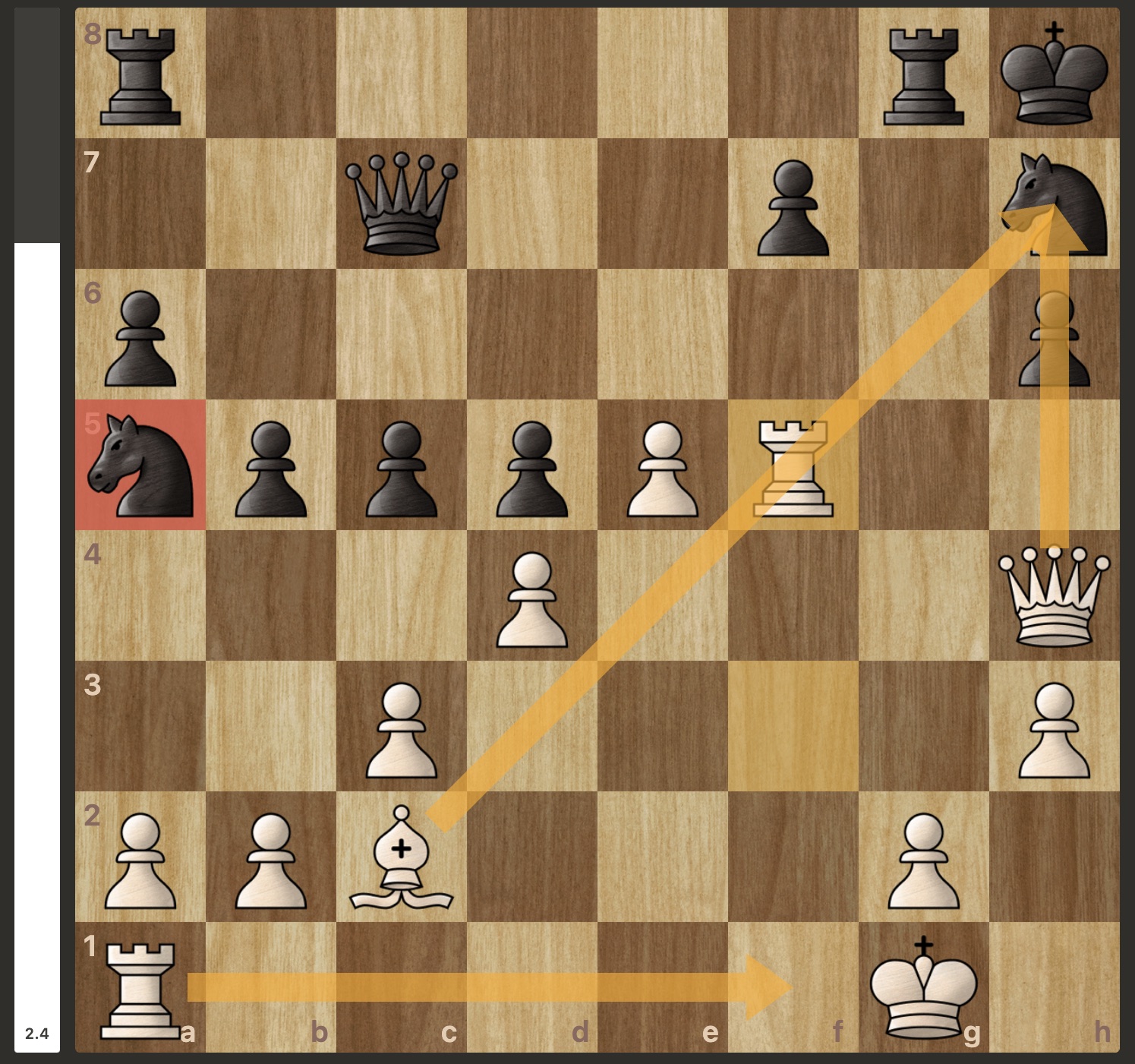
TL;DR: is that there’s still this looming threat of mate - doubling on the F file and the 4-point bishop on c2 is the threat. Black will drop the h6 pawn (so white gets 2 very important pawns for the piece) and then everything just comes barrelling down the kingside. That was the breakthrough sacrifice!
Anyway, I went ahead throwing the game away with my brilliant move Qg6, he responded calmly with Ng5 (an inaccuracy) Qh5 Nxh6+!! gxh6 g6!:
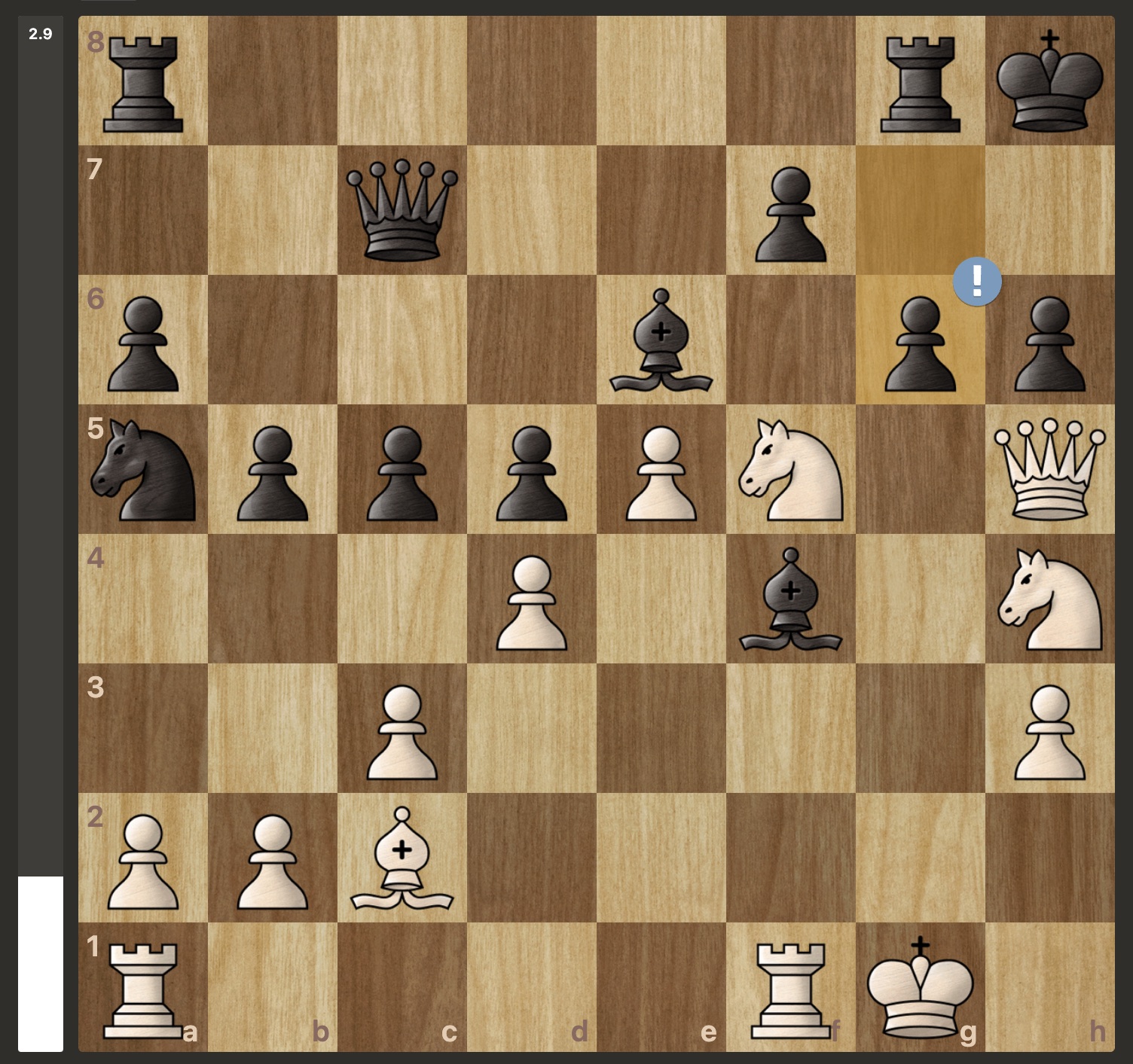
I must have been somewhat tilted to think that the next move I played (Nxg6+) was any good. White is already gonna lose a piece, no need to make it two for no reason. The obvious response fxg6 just creates another fork on the knight and queen and so black wins two pieces with no tangible compensation for white at all. Best instead was to simply retreat the queen with Qe2, but this position is already quite hopeless for white.