Playing on the Flanks
Opening
A standard Tarrasch French line, starting e4 e6 d4 d5 Nd2 Nf6 e5 Nd7, after which I brought out the bishop to d3:
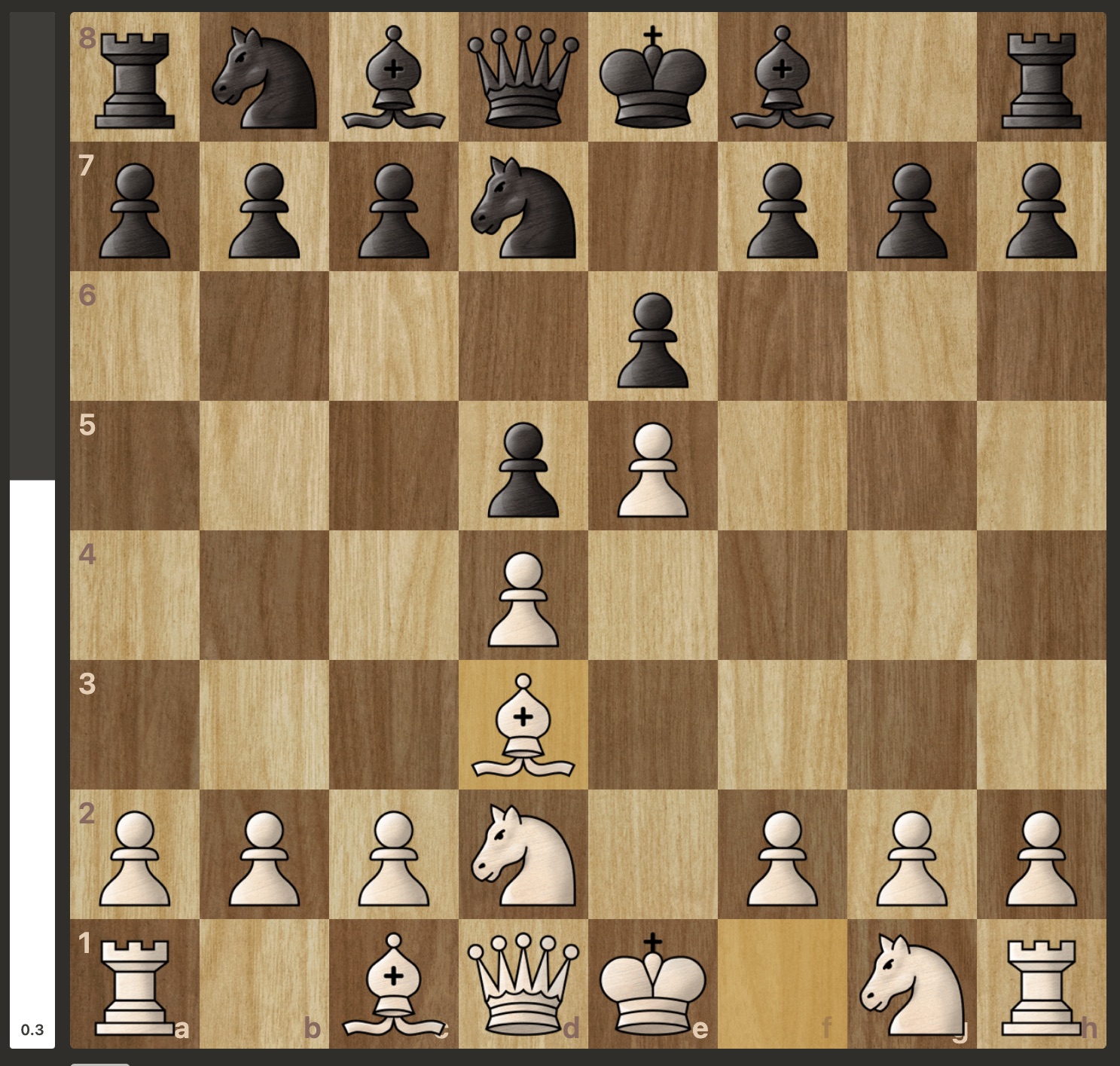
He continued in the standard French style with c5, after which I played c3. He developed his other knight to c6 and this is where the game became interesting:
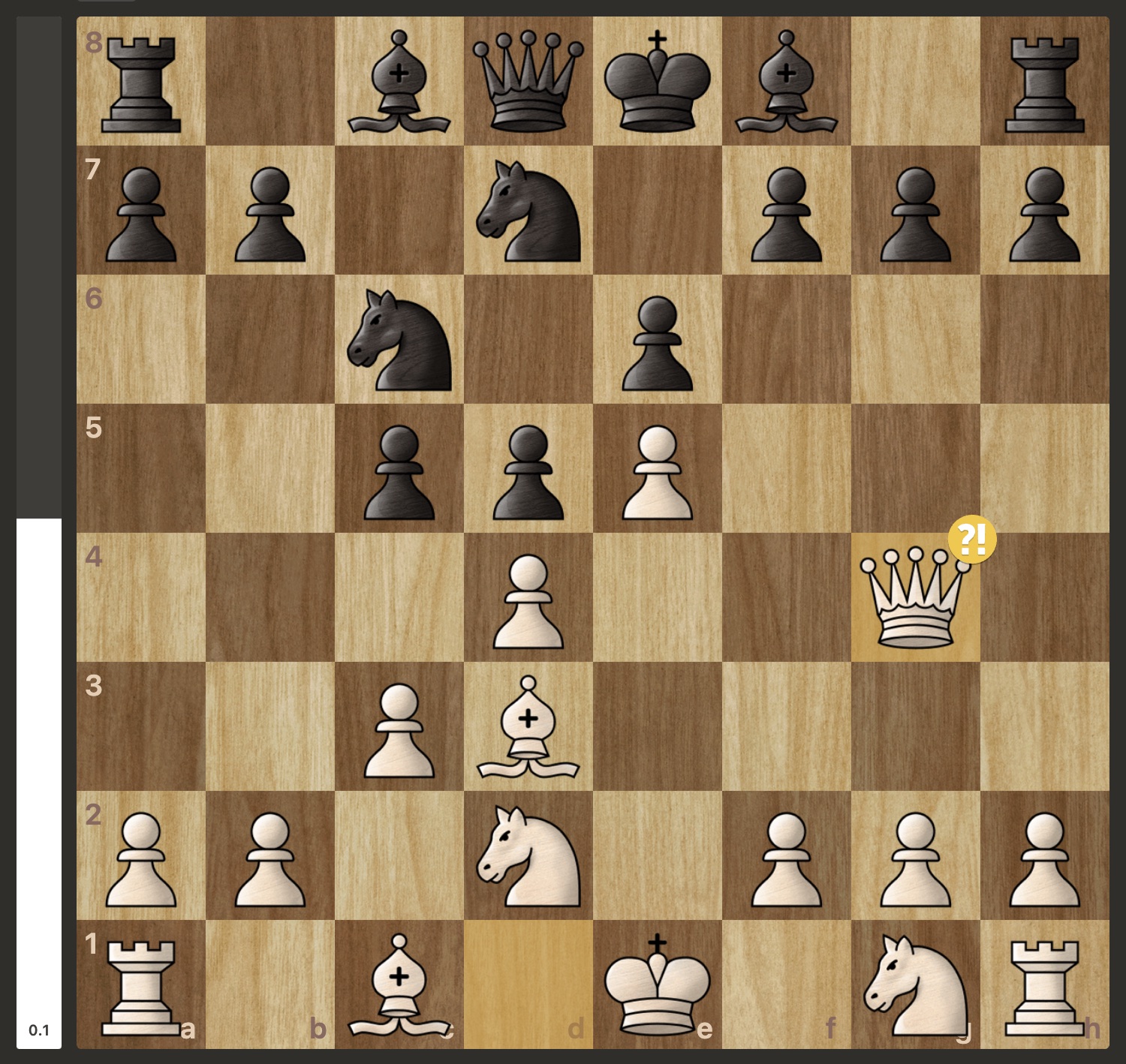
Ne2 was preferred by the engine, but I thought this went well with the typical idea of using the space advantage to attack on the kingside. What follows is a series of only moves, where black launches ahead with his kingside pawns - h5 Qf4! g5 Qe3! cxd4 cxd4 and black brings out his bishop to h6, x-raying the queen:
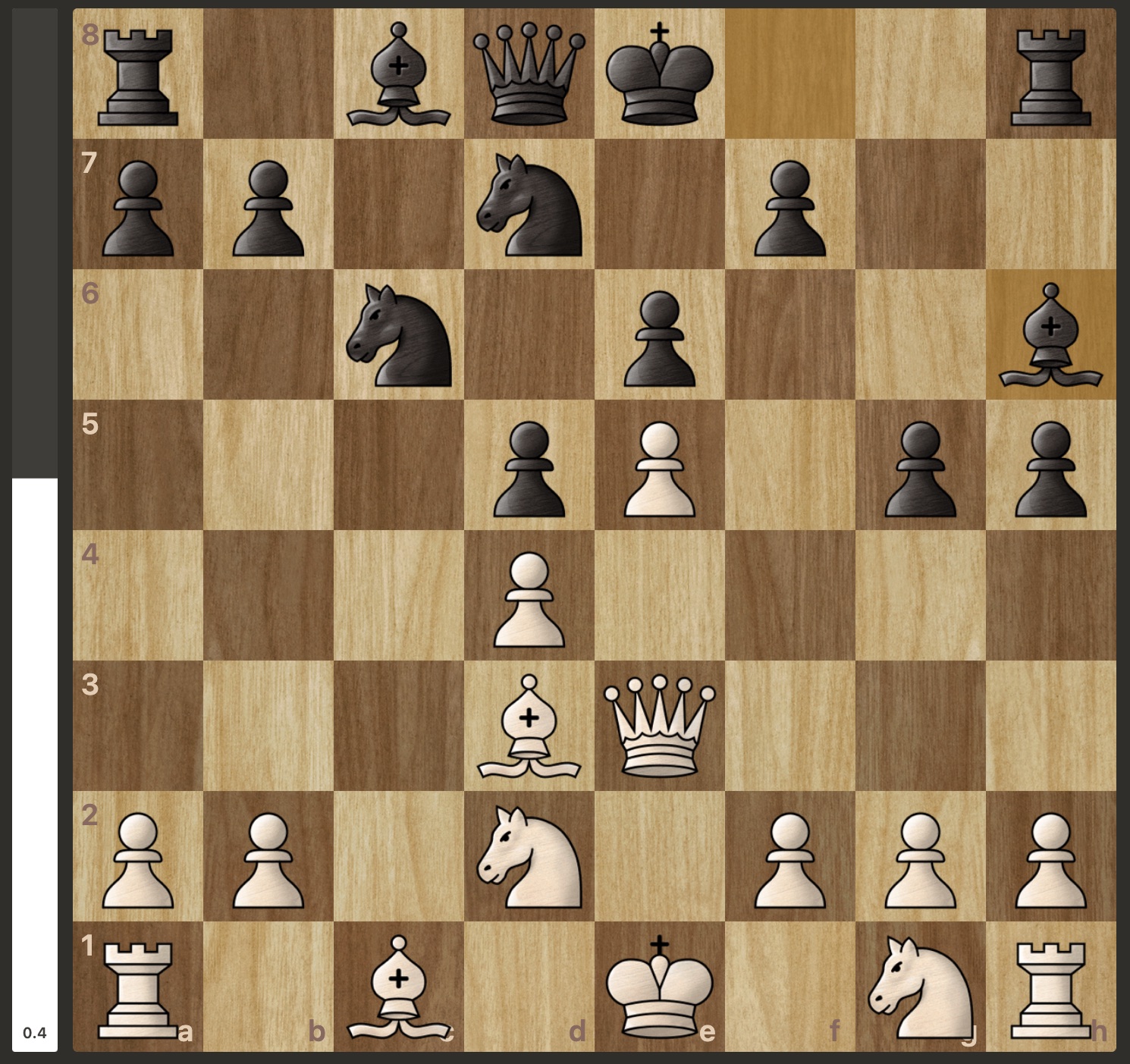
Here, the only move; Ne2. The threat is of course to discover an attack on the queen with g4, after which it has no square from which it can maintain contact with the d4 pawn. But here black missteps, jumping the knight in to attack the d3 bishop with Nb4?
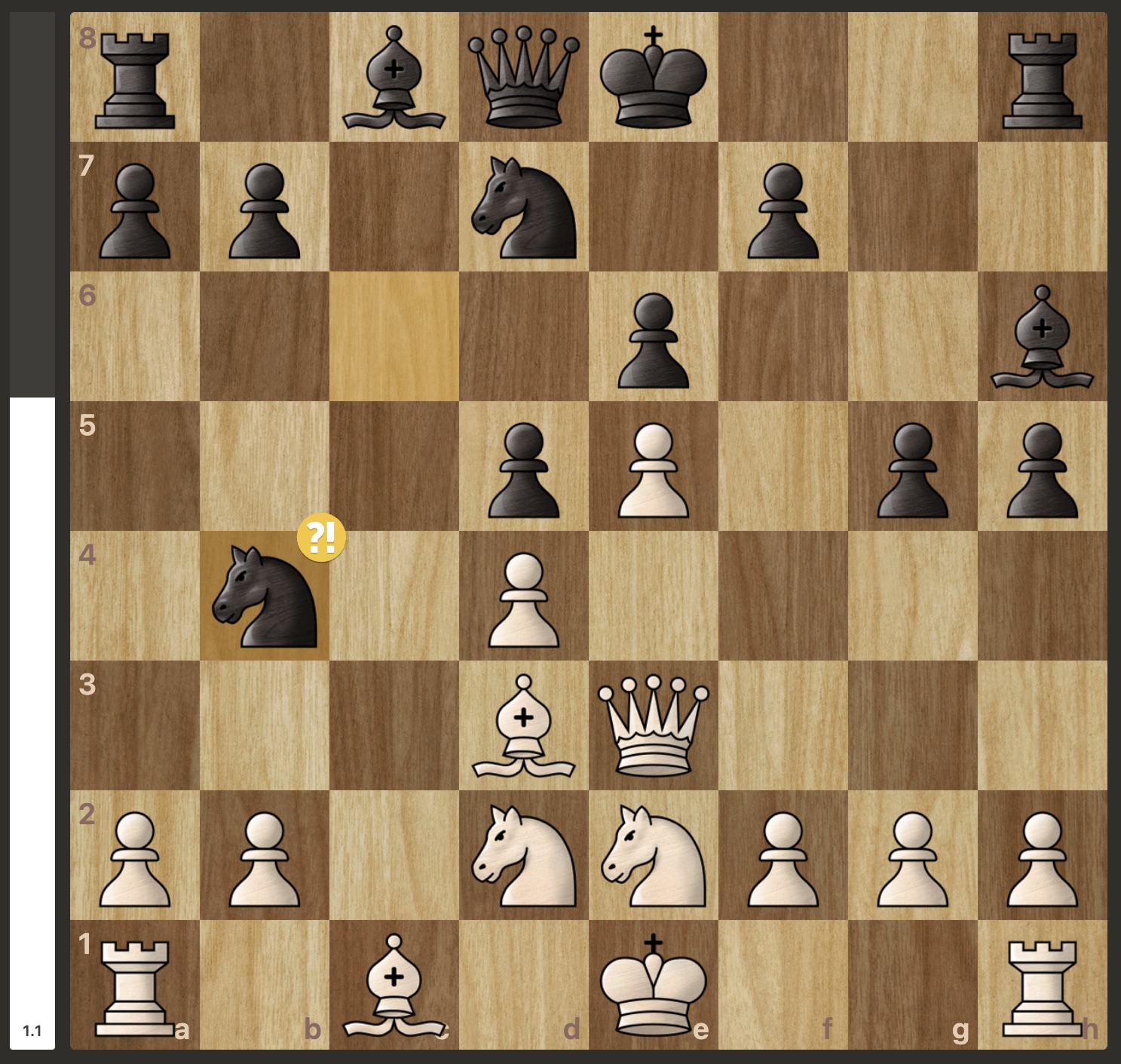
Why is this an error? Well, black is moving the same piece twice for a start, but also the king is no closer to safety, the bishop on c8 is no closer to playing an active role, and that the knight is not really doing anything on b4, where it can be easily chased away by a3 after which it will either have to return to b3 or go to a6 which is rather unpleasant. There is of course the threat of Nc2+, but that square is covered by the bishop. Here I thought for a while and played what I thought was a pretty smart idea: f3?
My idea was this: white would love to meet the g4 threat with f4, blocking the bishops view of the c1-h6 diagonal, but that ‘falls victim’ to gxf3 en passant. I can’t have calculated this far enough because looking at it with the engine now shows that simply castling here and meeting g4 with f4 followed by gxf3 Qxf3 gives white a rather pleasant position with the queen and rook aligned on the open F-file:
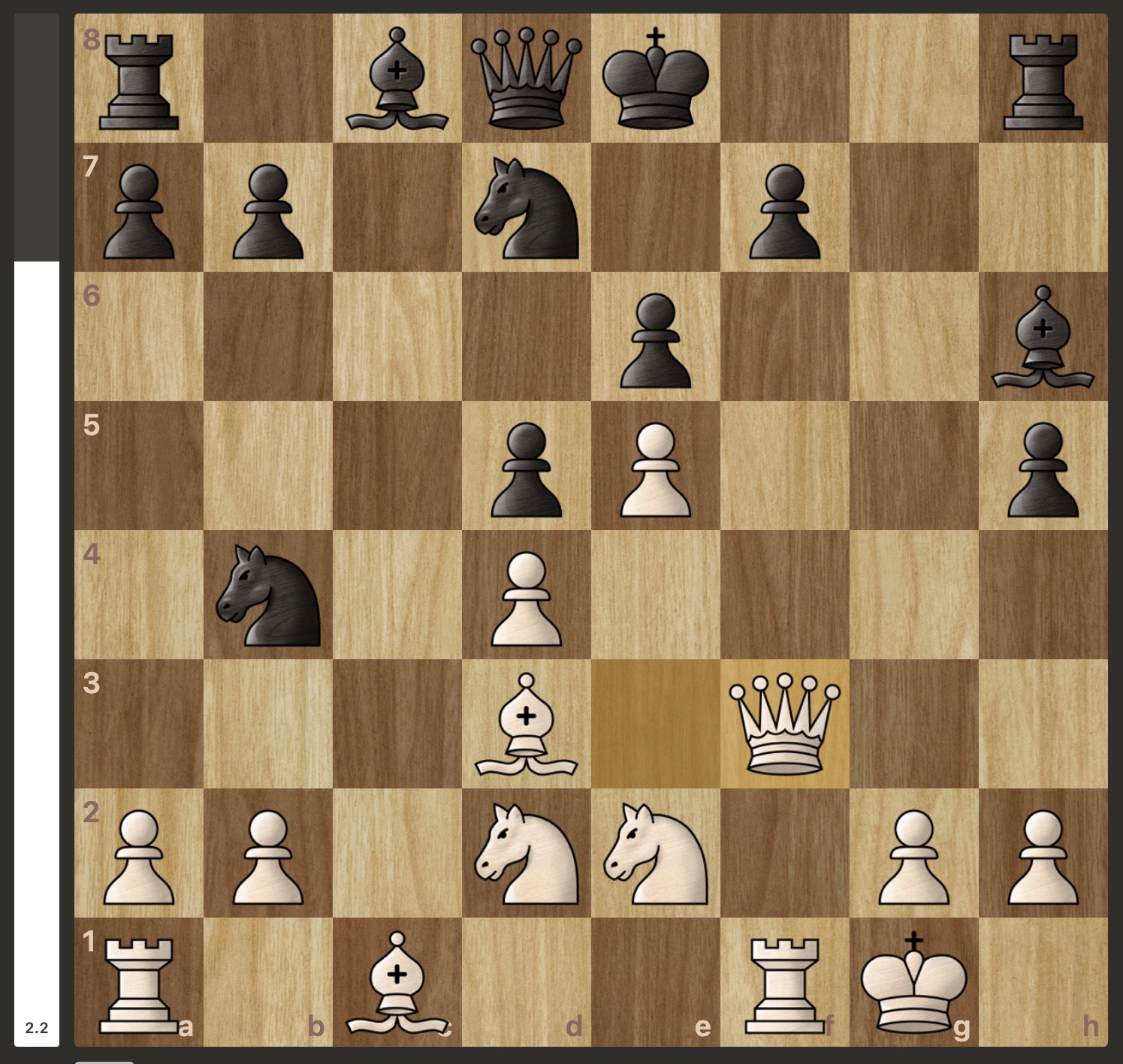
After Qe7 defending against mate, white derives his +2.2 advantage from the fact that he is way ahead in development and the black king will now seriously struggle to find shelter. I’m not sure what I missed here that led to the f3 idea, I do not remember finding Qxf3 at the end of the line, perhaps because I missed that the knight on d2 is defended by the c1 bishop. Either way, I went ahead with my f3 idea feeling quite smart indeed. The line that I had calculated with f3 g4 f4 does lead to a comfortable position for white, which we will analyse in a second after seeing the refutation to Nb4: Bb1!
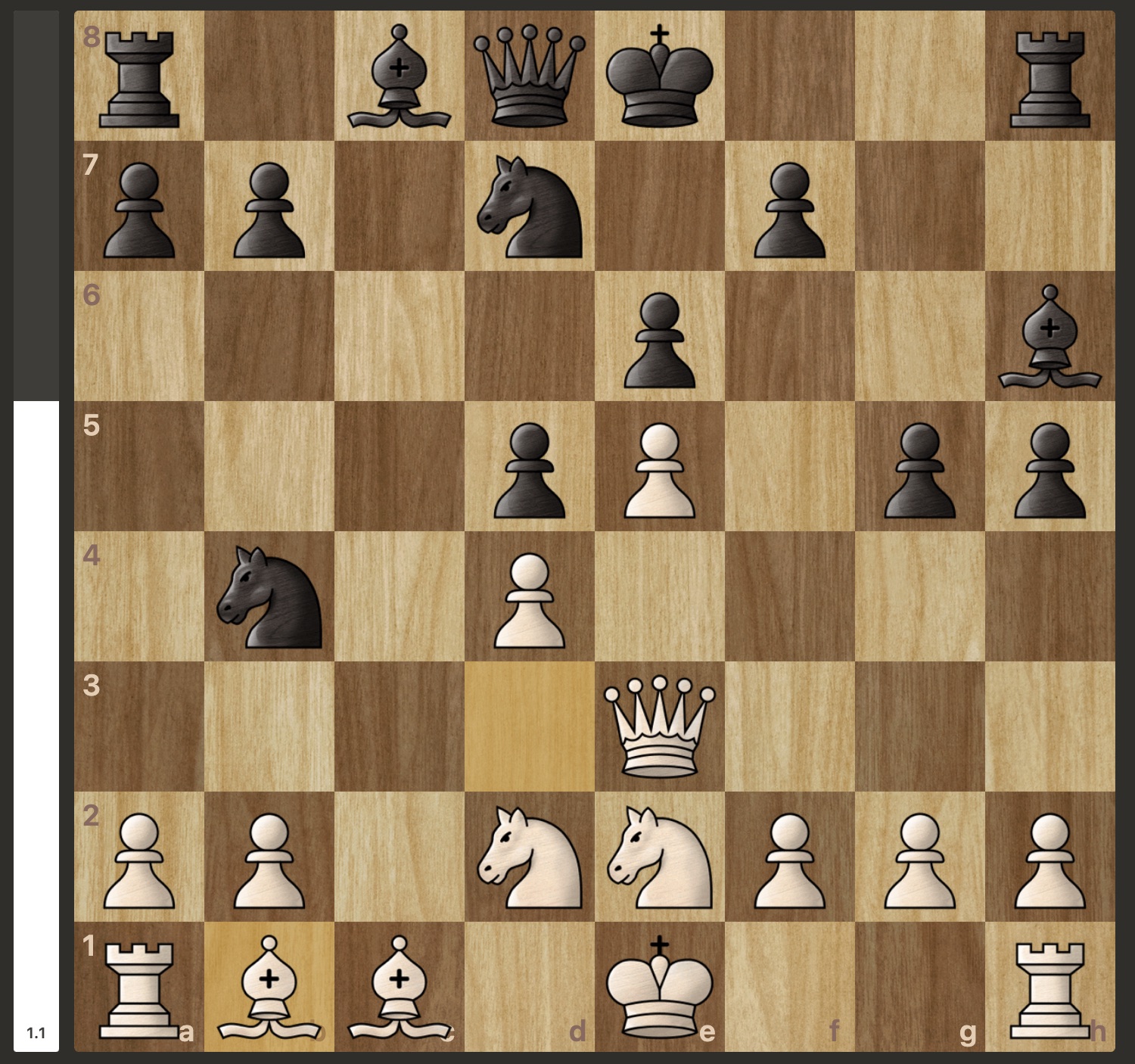
A very engine-ish line for sure, but the intuition is this: what does black do now? White maintains the two Ruy Lopez bishops, sniping down the black kingside, and black now has to continue development with Nb6, Bd7 and Qe7 before he even has the option to castle. In the meantime, white can castle kingside whenever he likes, can manoeuvre his knights to great squares on c5 and b5 (with Nd6 ideas at some point) and black has to tie himself in knots to try and develop safely. Not only that, but Bb1 also covers the check on c2, and opens the escape hatch for the white queen down the third rank. On top of even that, white can start his own pawn storm with tempo; a3 is always an option here. Not a move I would have seen if I was given half an hour but a really fascinating line, deep positional understanding required to see in advance why this is a good move.
Anyway, back to what I missed with f3:
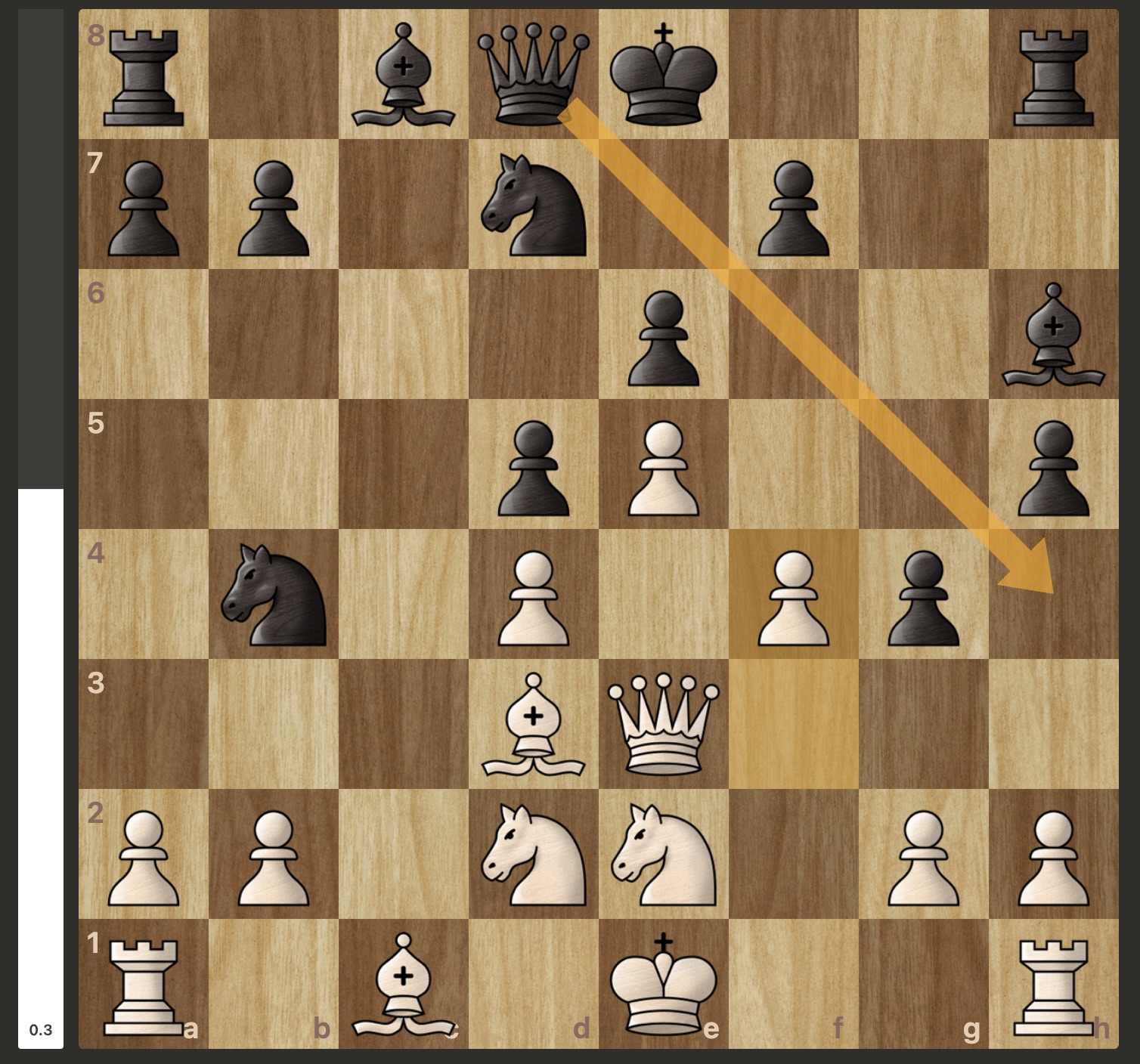
Qh4+!
The best move in the position. After this, the best move for white is the incredibly engine-like move Kd1, giving up castling rights completely. The other roughly equal move is g3, kicking the queen away but opening up future ideas of h4 for black, and white has to say goodbye to his kingside safehaven.
Black didn’t play any of that though, and instead simply snatched the bishop: Nxd3+?!
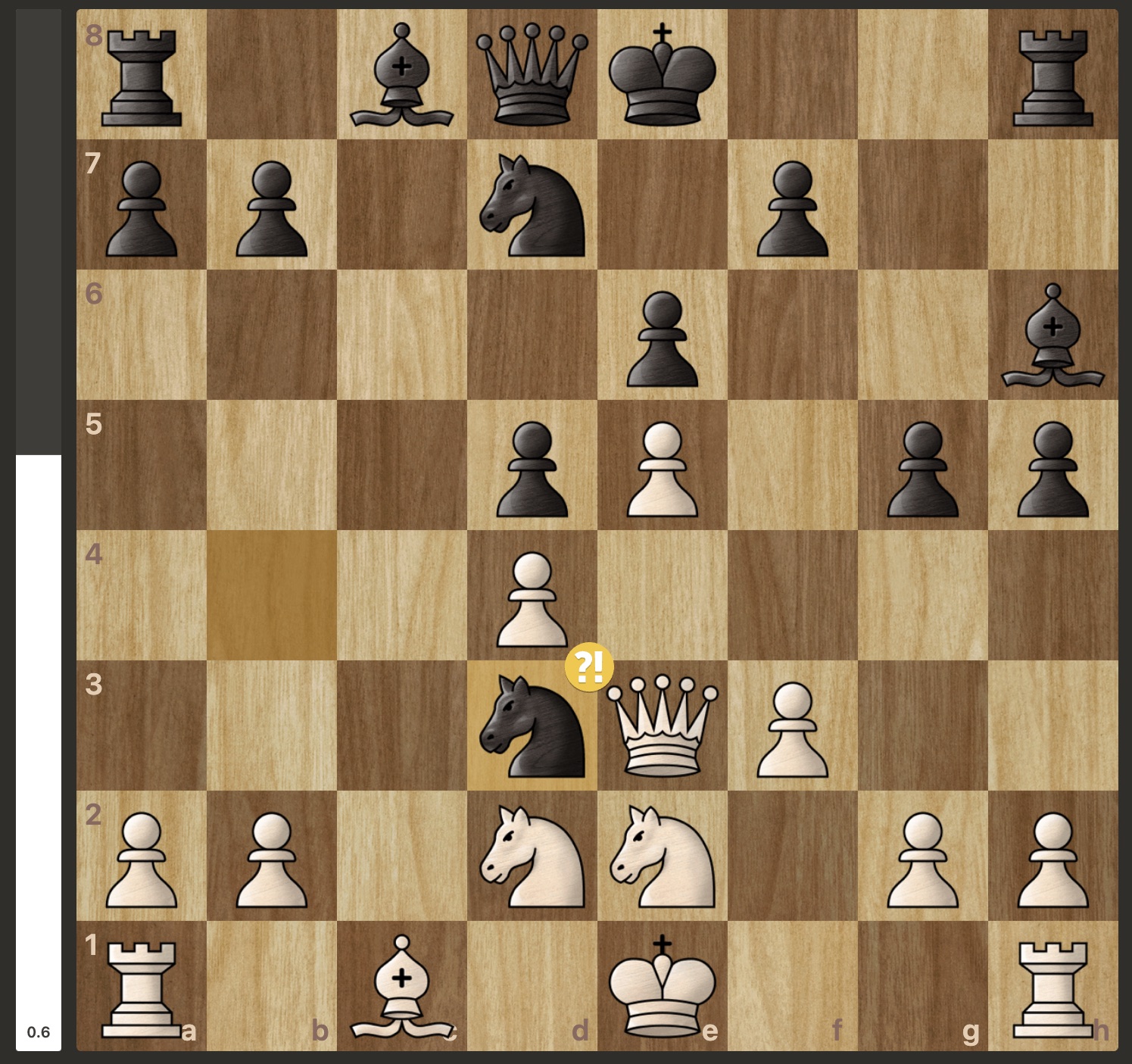
To which I responded with the obvious Qxd3. Black then continued Qb6 (which I thought was inaccurate as it blocks the development of the d7 knight) Nb3 a5 a4 Qd8 (rerouting the queen) O-O b6 f4?! (Nc3 was stronger, f4 doesn’t accomplish much) Ba6 Qd1! Qe7?! f5 O-O-O f6 (gaining the kingside space) and the queen retreats to f8:
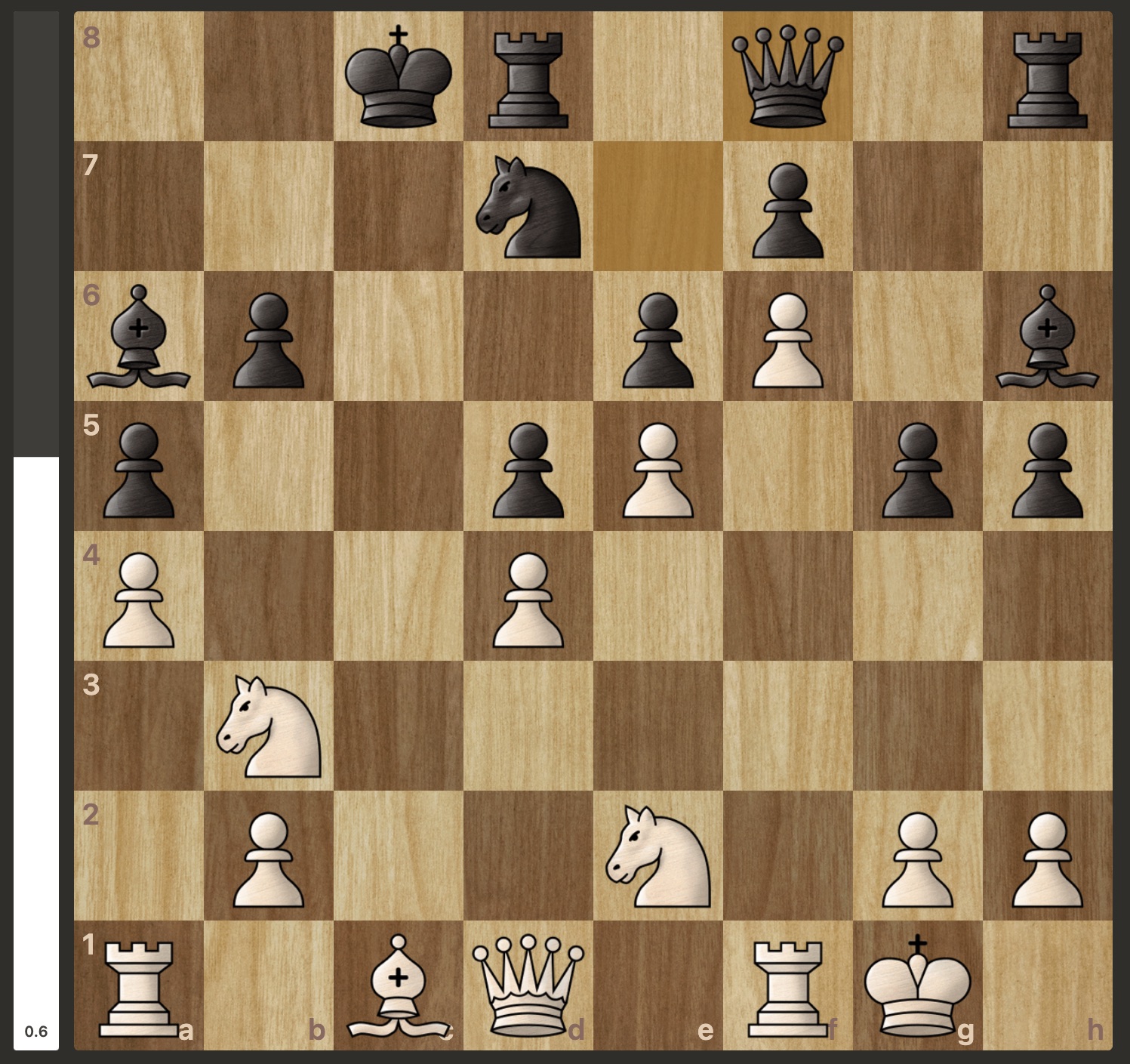
Again here, the engine wants Nc3 with the idea of moving it to b5 and trading it for the light squared bishop. Makes sense as blacks light squared bishop is a key defender of his very airy queenside and the e2 knight is one of white’s worst pieces. Sacking the exchange is fine there because it re-routes the queen to f1 and puts it in position to invade on the queenside.
The move I played, Bd2 is an inaccuracy here because black can simply respond with g4 and open his bishops line of sight. Black didn’t punish me for it however, and misstepped: Kb7?!
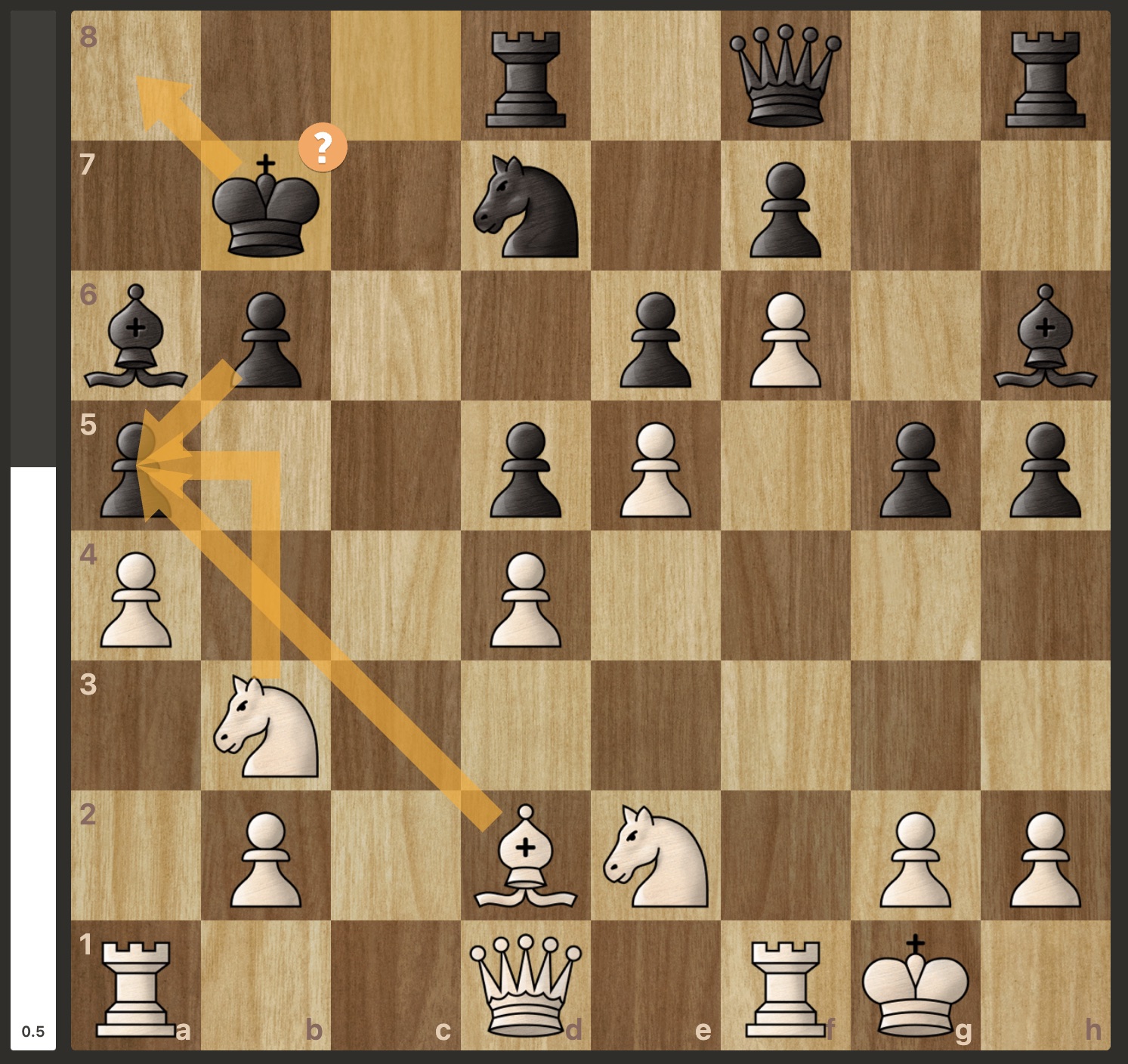
The engine, yet again, says to simply bring the knight into the game with Nc3 and slowly build the pressure. Black’s position is terrible but there is no decisive blow yet, as we’ll see soon, but if white can instead plant his knight on d6 (via c3 → b5), white is completely dominating the position. Instead, I saw the bishop sac idea and my eyes lit up; at the end of the line Bxa5 BxA Nxa5+ Ka8 (a retreating square which I missed), we reach the following position where black is slightly better:
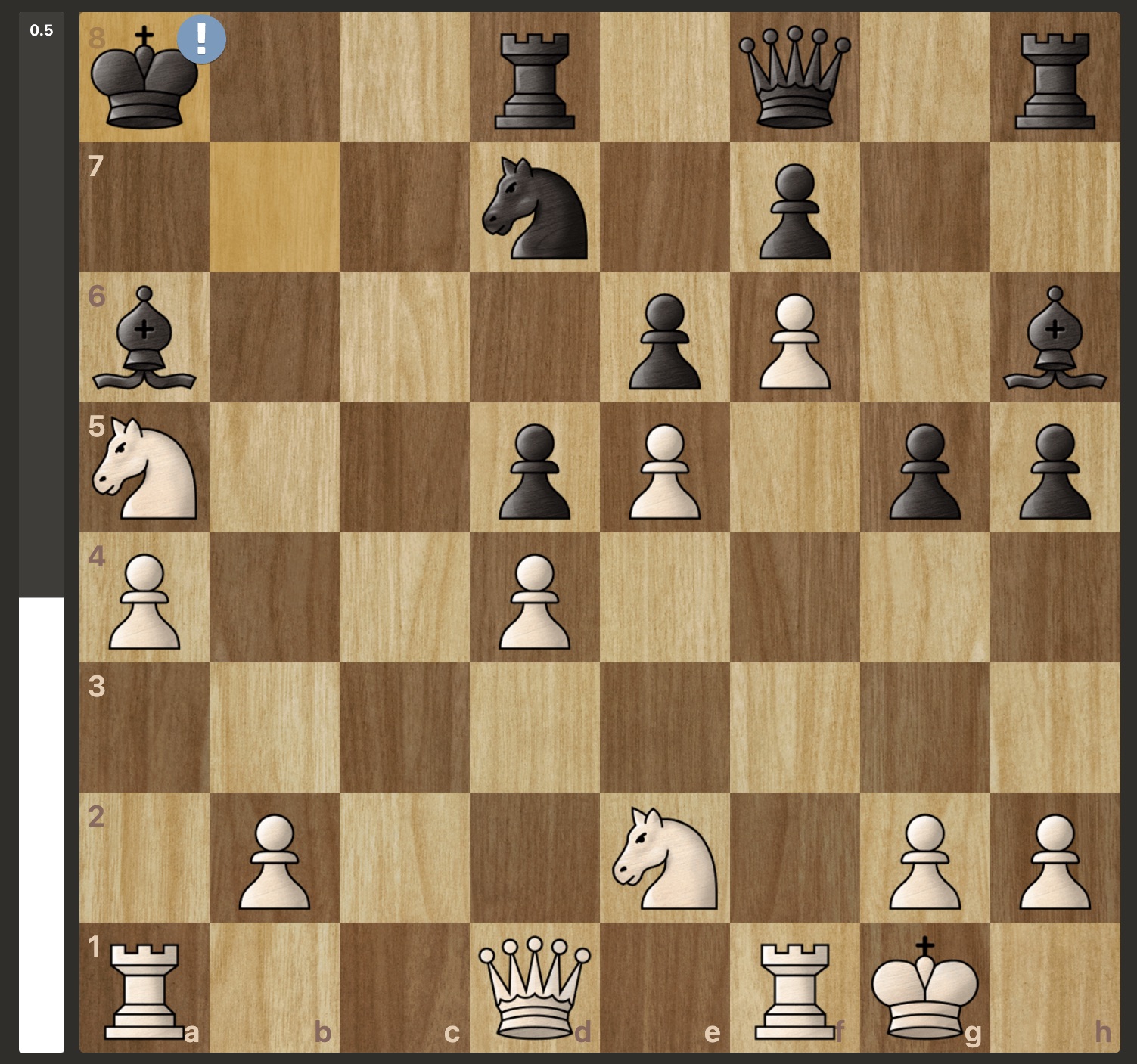
I think here I missed that black does have a way to consolidate the position, the queenside is not quite as weak as it appears due to the pawns keeping the key files closed and also being far back enough to allow black to rearrange his pieces before the pawn storm creates any real threats. The fatal flaw in the white plan is that b4 is defended by the queen on f8. The immediate b4 pawn push is prevented and black can use that square to activate his queen. The best move recommended by the engine is to take that square under control immediately with Nc6, but I erred and only now starting bringing my knight to the party: Nc3?
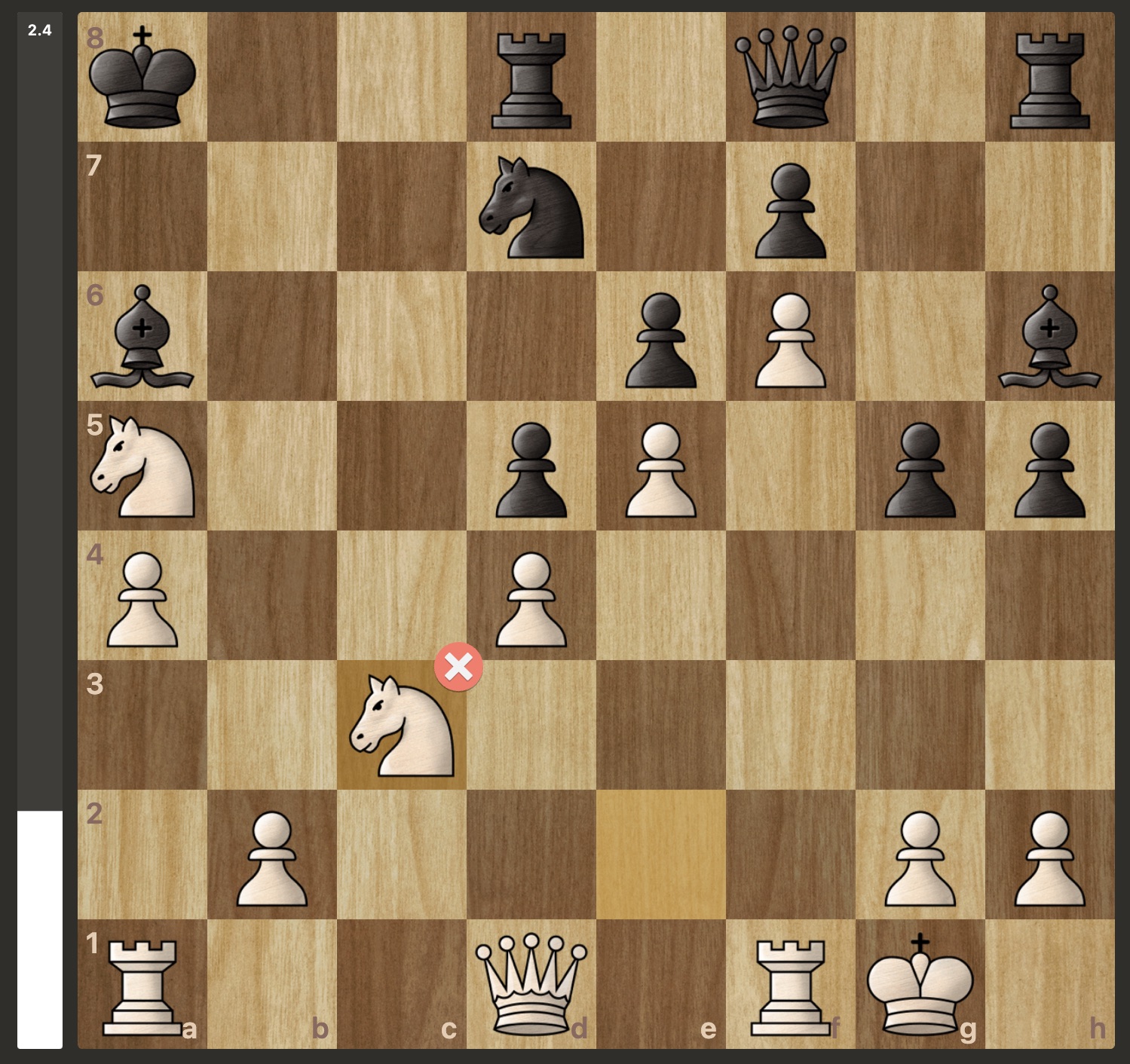
Far too slow; this knight should already be primed to jump into the enemy king position before the sacrifice is made. Now black has adequate time to consolidate: Rc8 contests the key file, then after Nb5 black has the fantastic move Qb4!
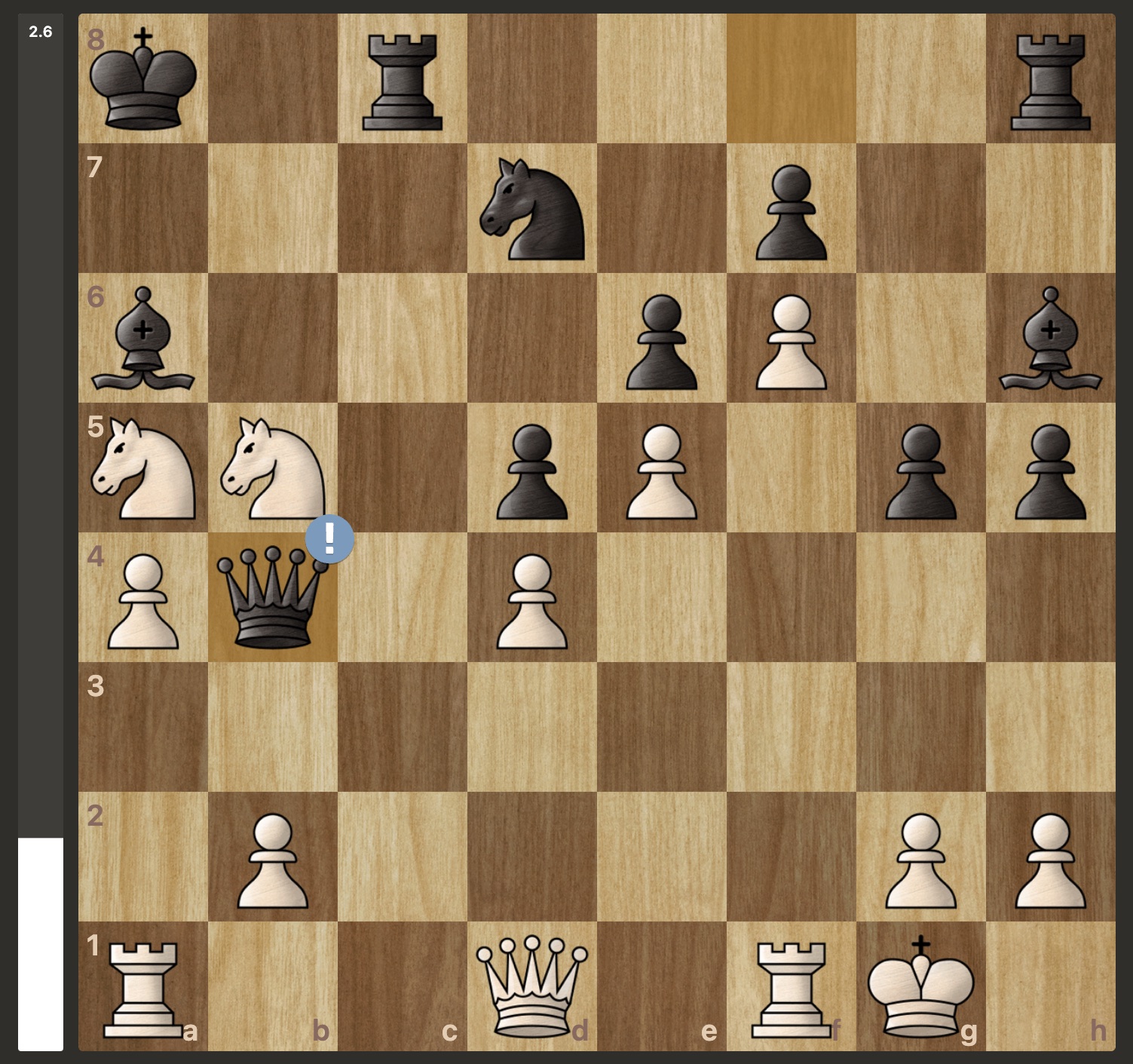
White is busted, his attack refuted. He must retreat the knight meekly to b3 lest it be captured, and after g4 blacks position is strong, he can double rooks on the C file and white cannot, the h6 bishop controls c1 and threatens to jump into e3 with check and target the weak d4 pawn, not to mention white is still down a piece. Practically speaking this is not such an easy line to play for black, but a strong player would I imagine see that there is no immediate way for white to capitalise on the weakness of the black king. Black doesn’t spot this plan, however, and blunders right back with Nxe5??
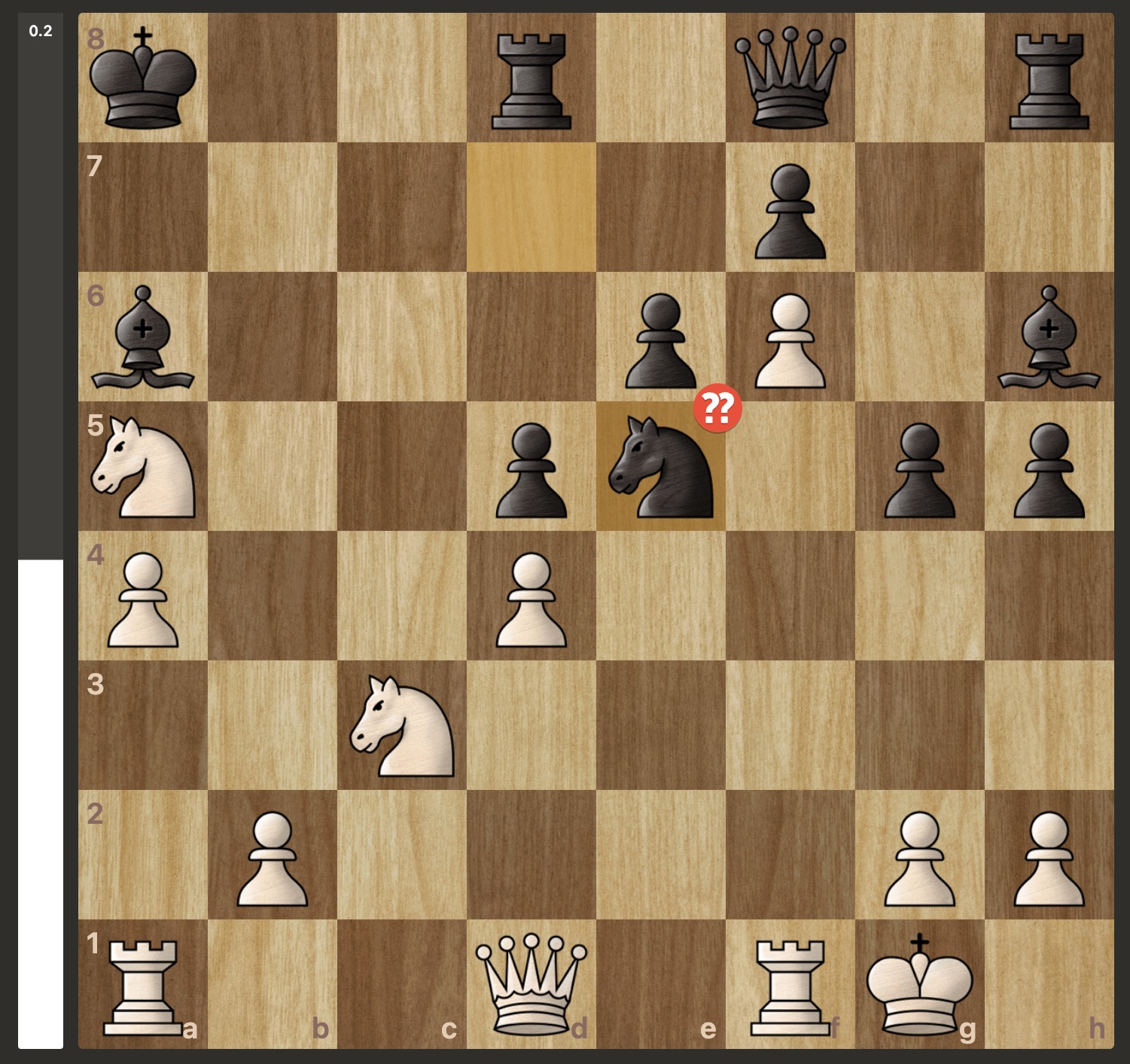
A cheap trick, if white were to take. DxE Qc5+! wins the knight on a5. I saw this of course and instead ignored his trojan horse by finally finally landing my knight on its key square, Nb5
Black can still hold a draw here, but the line is easy to mess up. Blacks only move is to bring out the queen with Qb4 only after which white can take the knight on e5.
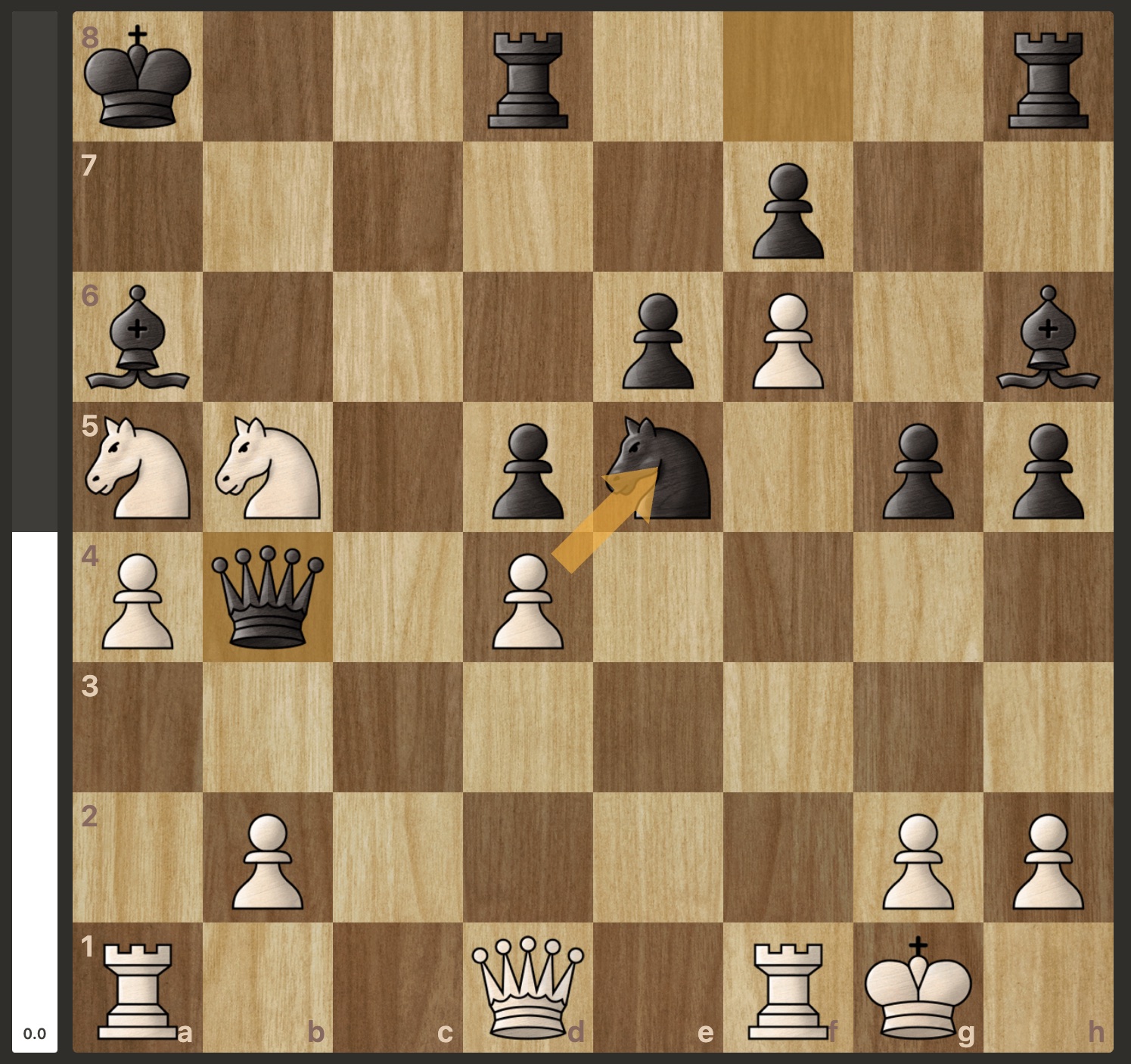
There is a great line here that demonstrates how easy it is for black to blunder in this position. The natural recapture Qxa5 loses the game for black - the knight is poisoned, and black is lost after the crushing Qd4!
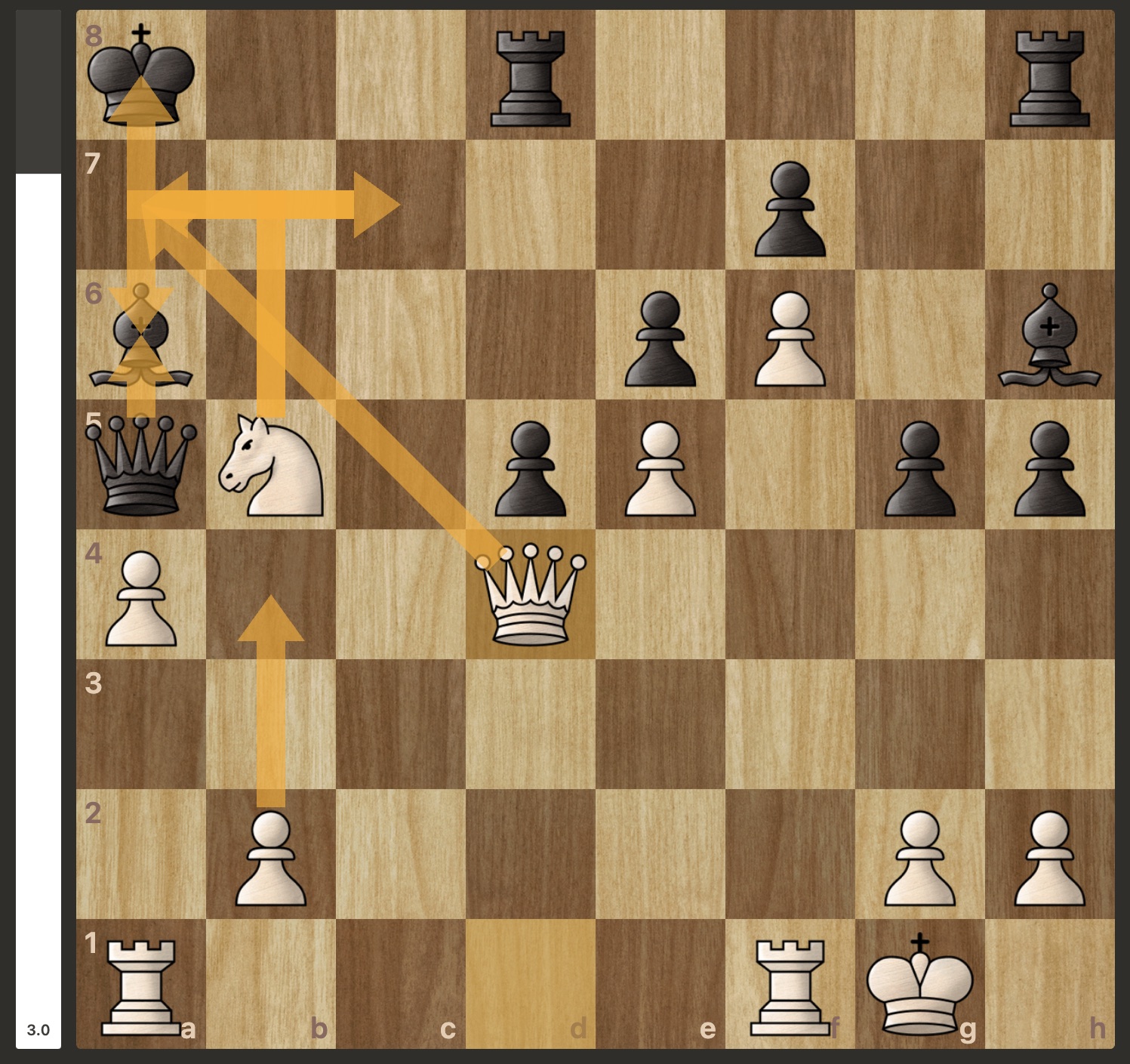
Mate is threatened on a7, to which black must defend, but only one move works. Retreating the bishop loses the queen as after b4! black must either move the queen to a square on which it can be captured, or retreat to a6 after which the knight lands the royal fork with Nc7+!.
Black missed this continuation however, and blundered the game away with Bxb5??
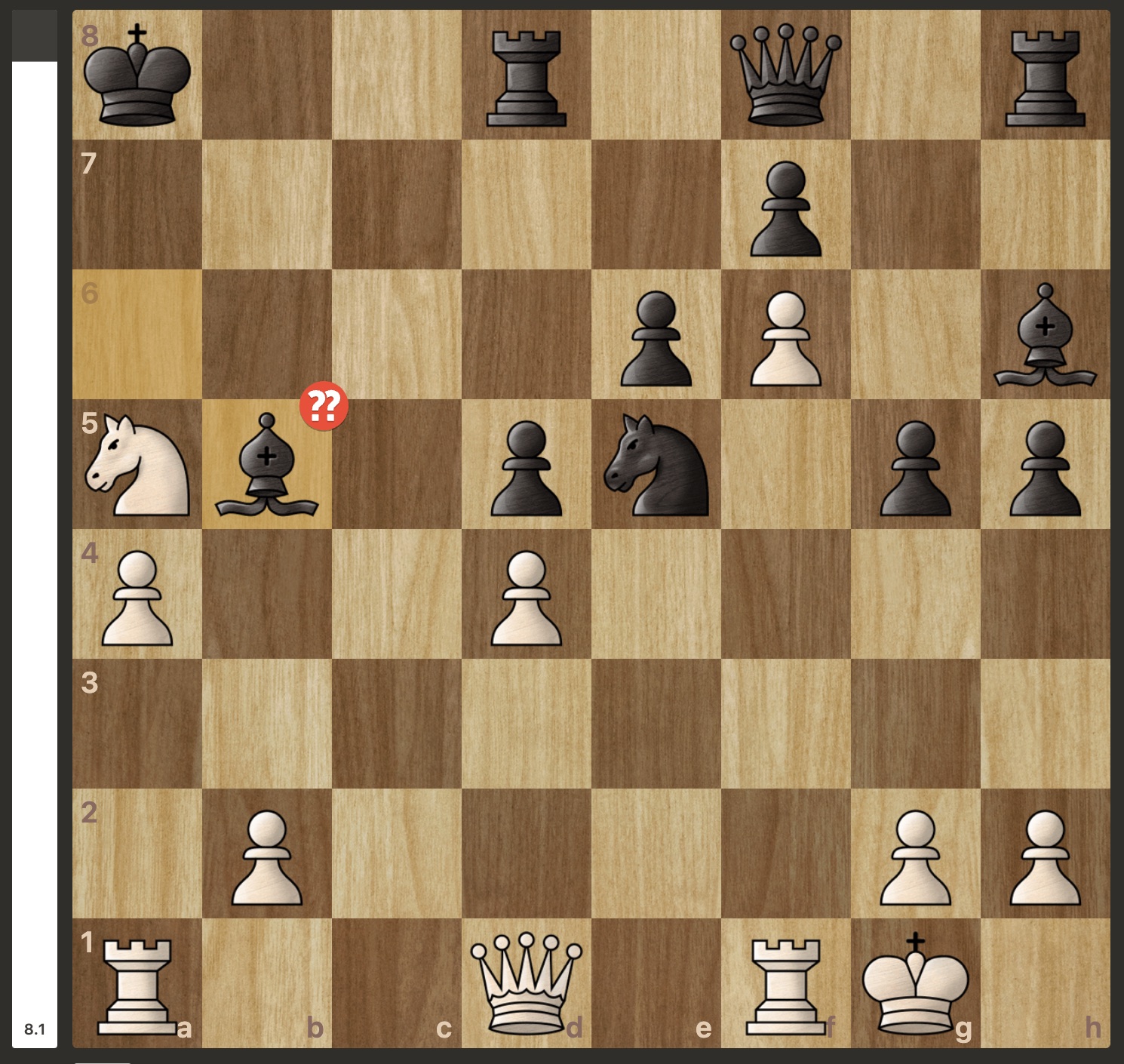
I followed up with the obvious axb5, and he tried running his king to safety with Kb8, to which I responded Qa4. I can only imagine he gave up at this point as he played g4 (which does nothing, white doesn’t need the C file now that the A file is open) and I cleared the path towards mate with Nc6+. He responded with the recapture Nxc6 and this is the position:
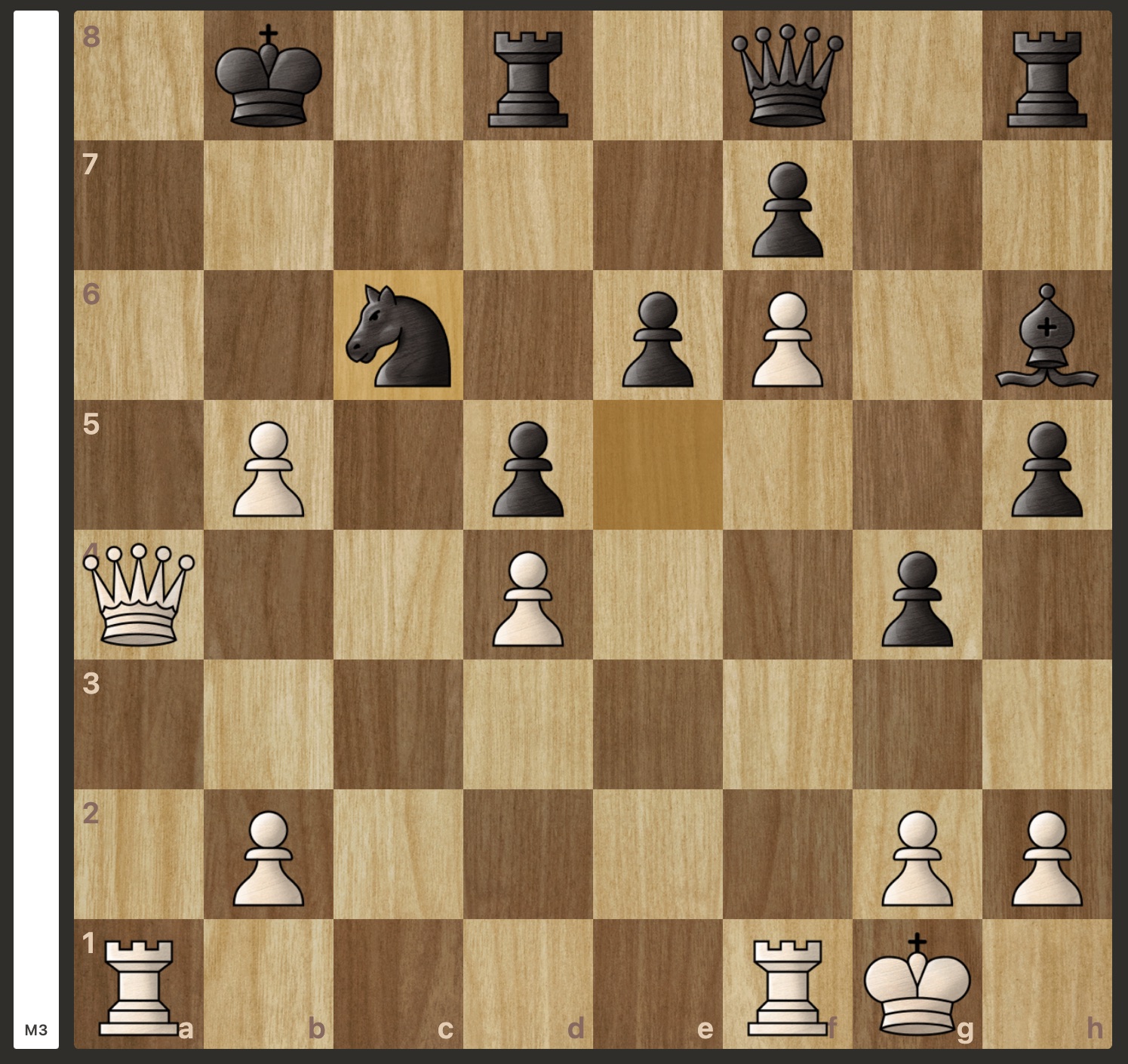
Pop quiz: what’s the fastest way to mate here? In the game I missed it and recaptured with Bxc6, but more precise is the sequence Qa8+ Kc7 Qxc6+ Kb8 Ra8#.